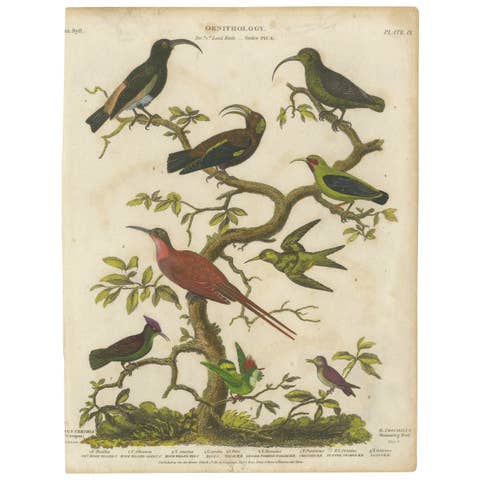
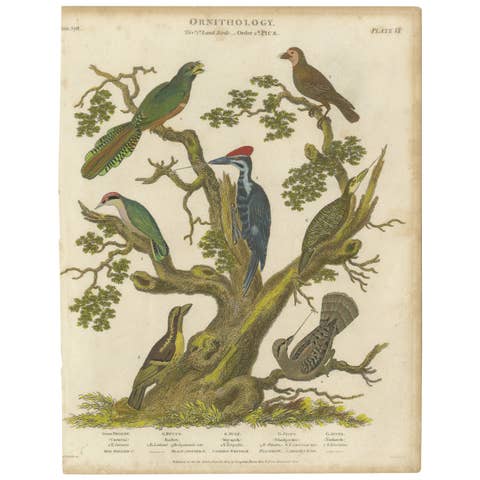
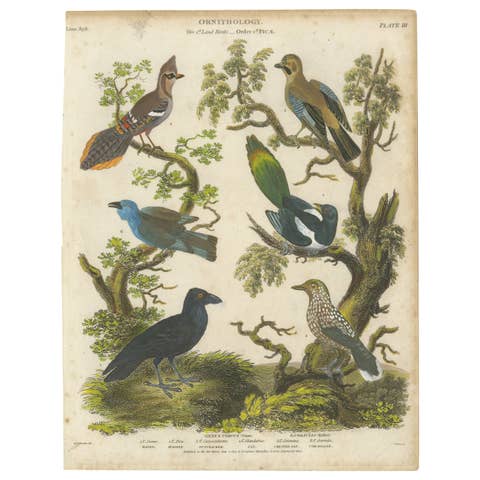
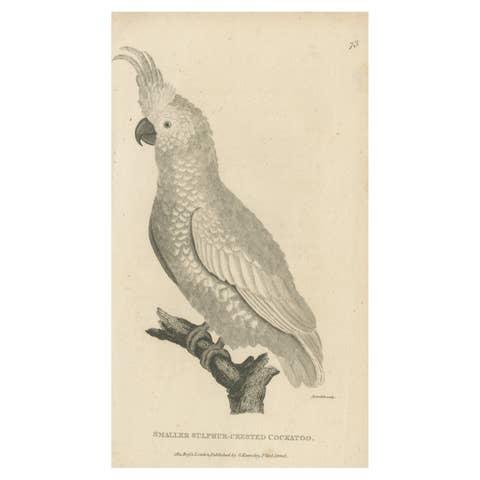
1811 Ornithology Gallinae Plate IV - Antique Poultry Print
€ 270
Original antique · The actual sheet photographed · Certificate of authenticity on request · Sold unframed · Worldwide shipping from € 15 (rates)
Date
1811
Sheet size
27.5 × 21 cm (10.8 × 8.3 in)
Condition
Good
Reference
BG-13535-106
What the condition grades mean
Excellent
Bright and clean, with no faults worth mentioning.
Very good
Only light signs of age, such as faint toning.
Good
Normal signs of age for a sheet of this period: toning, some foxing, small marks or neat old repairs.
Fair
Clear faults such as staining, tears or repairs, priced to match.
Every fault we see is written in the condition note, and the whole sheet is shown uncropped in the photos.
Condition
Good. Some tape along edge on reverse for stability. Browning and foxing especially around the edges. One crease on the left. Left side cropped. Vibrant colors, suggesting the print has been well-preserved. Study the image carefully.
About this sheet
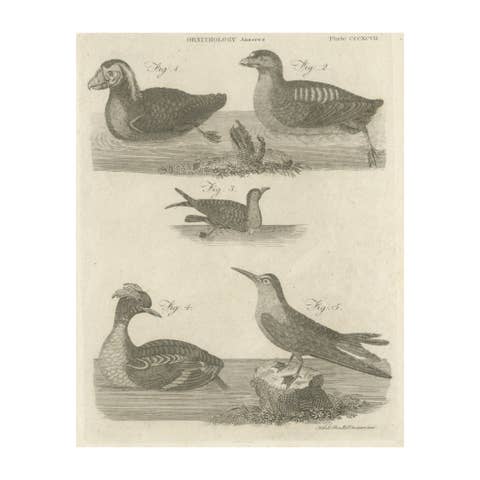
This ornithological print from the early 19th century, Plate IV in its series, showcases birds from the order Galliformes, known for species like turkeys, guans, and curassows. It's a fine example of educational art from Rees' 'The Cyclopaedia, or Universal Dictionary of Arts, Sciences, and Literature'. The detailed illustrations provide a visual study of each species' unique plumage patterns and body structures, reflecting the high standards of natural history documentation of the time.
The species are labeled as follows:
1. G. Meleagris (Turkey) - AMERICAN WILD TURKEY. 2. G. Penelope (Guan) - ORINOCO. 3. G. Crax (Curassow) - FEMALE, Male - CRESTED.
Publication Information: The print, marked as published by Longman, Hurst, Rees, Orme & Brown of Paternoster Row, does not display a publishing date on this print, but it likely adheres to the same legal publication directives as similar prints from the collection. The artists responsible for the engravings after the original drawings have crafted a work that is both scientifically accurate and aesthetically pleasing, serving as an essential reference for 19th-century ornithological studies.