About this sheet
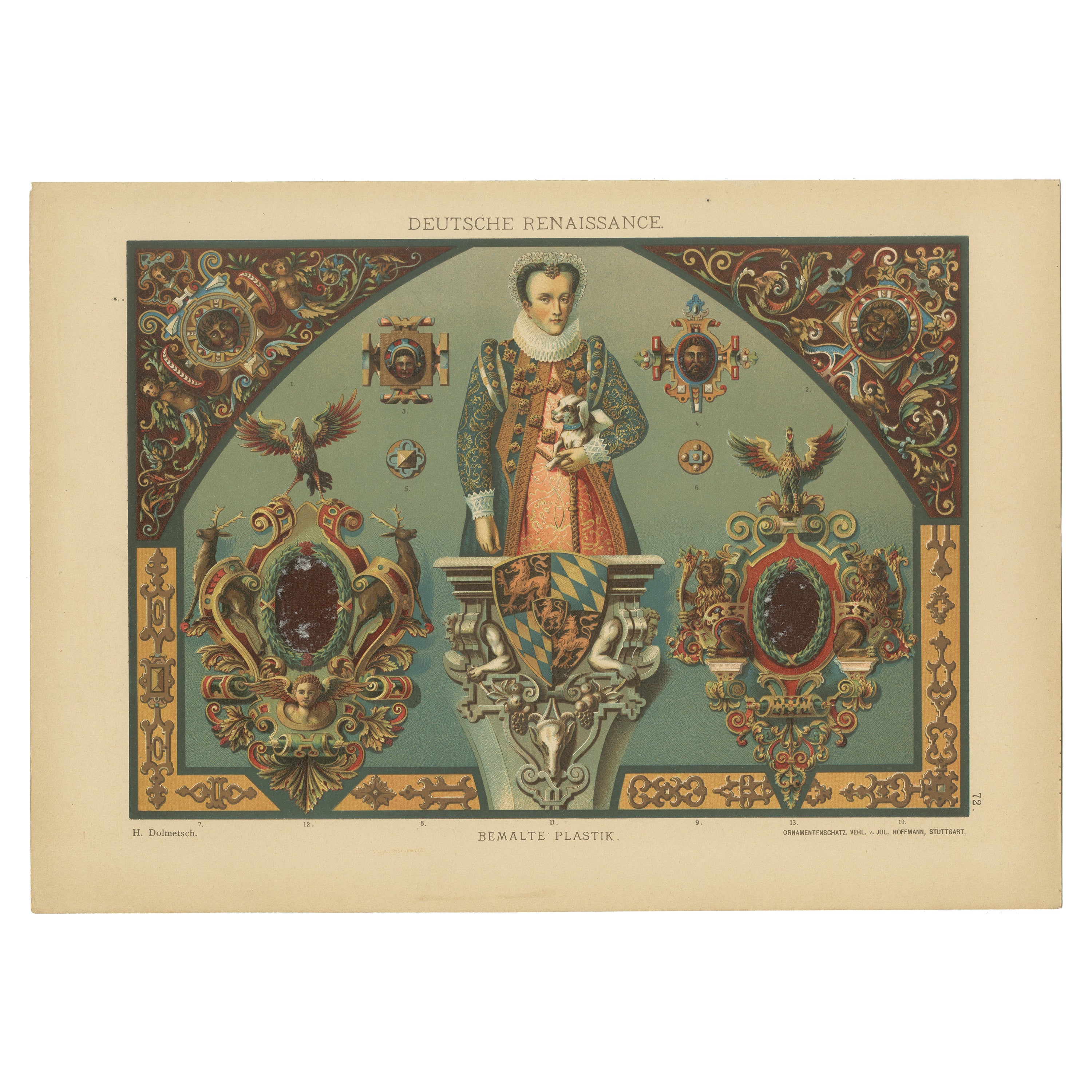
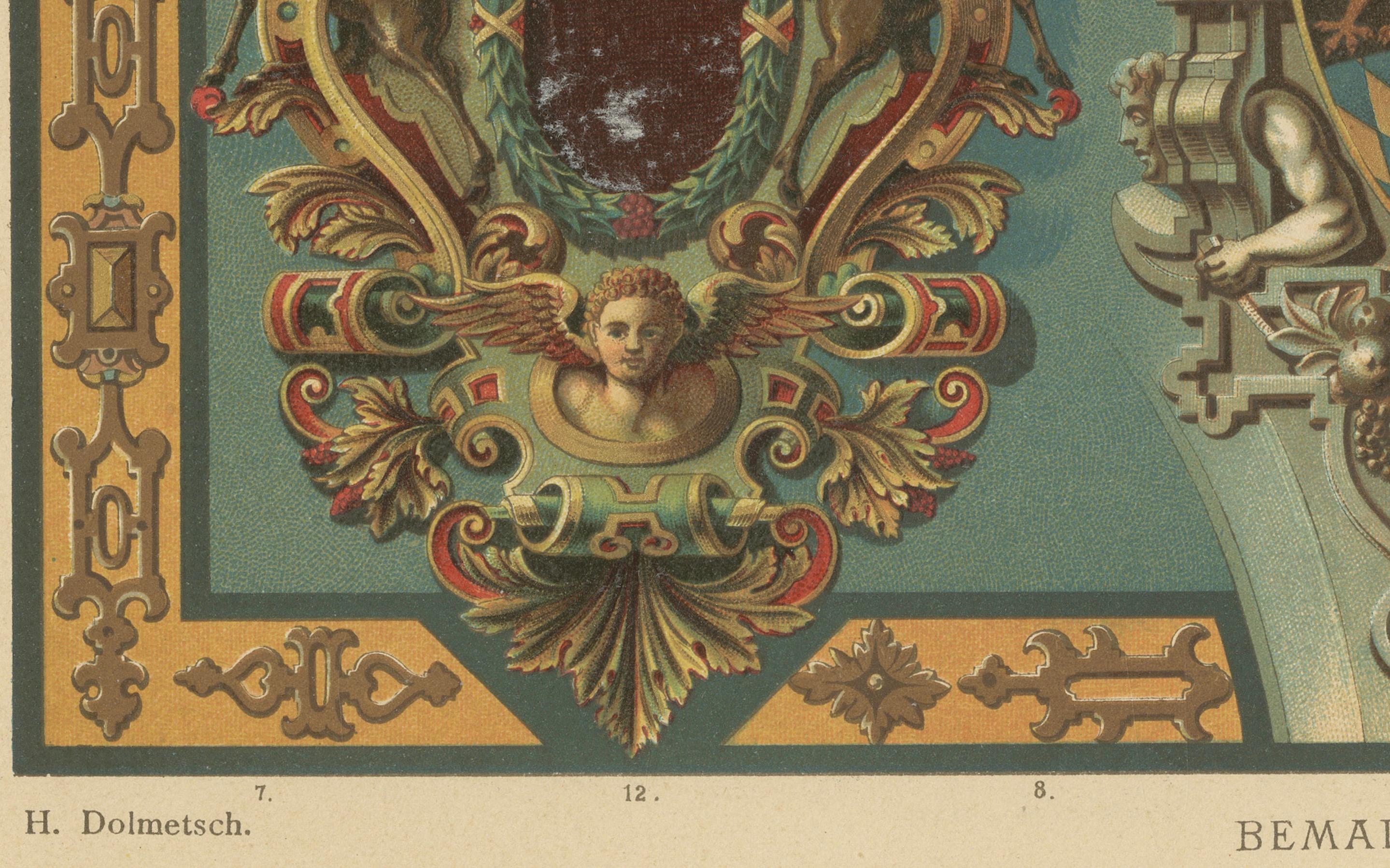
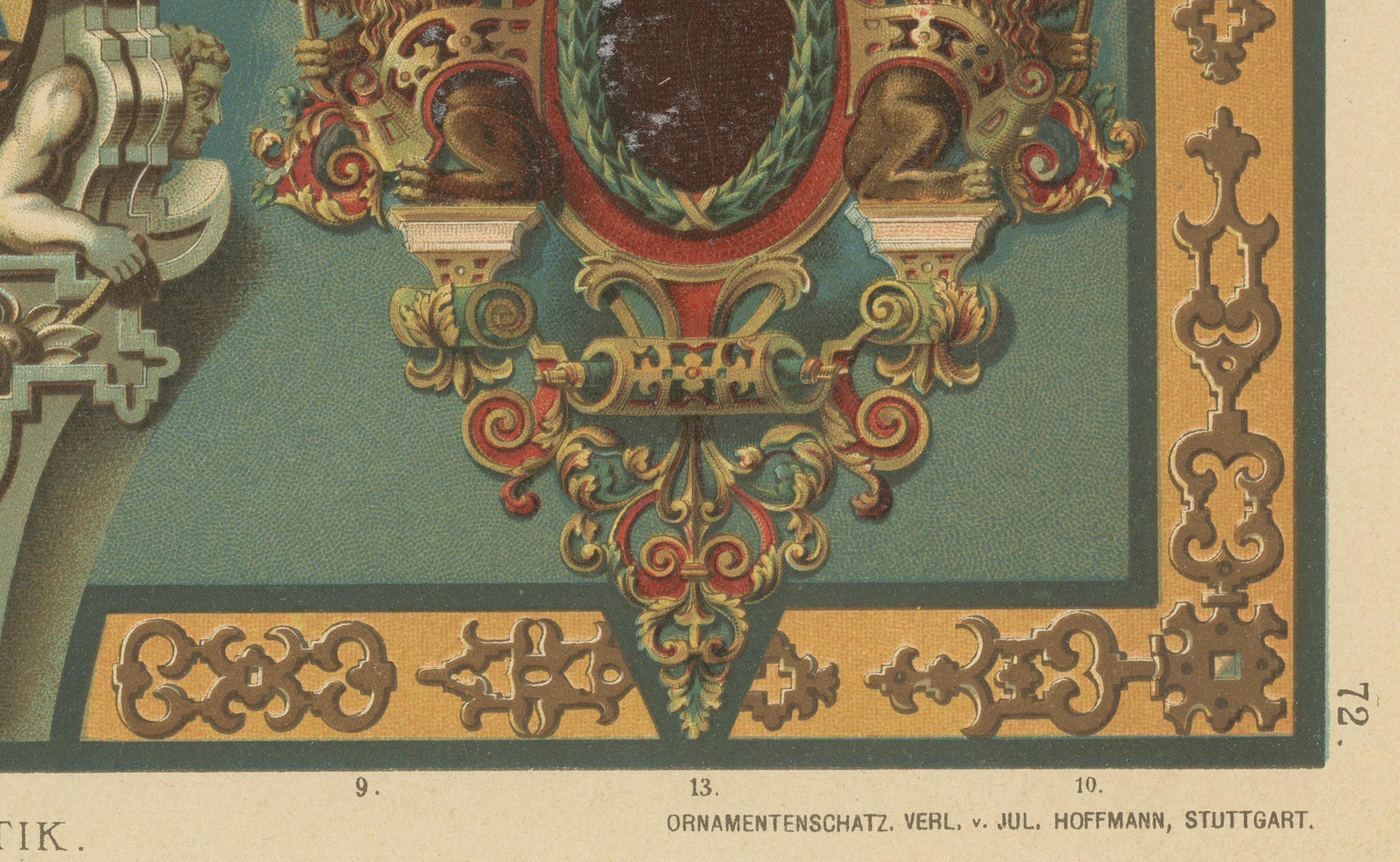
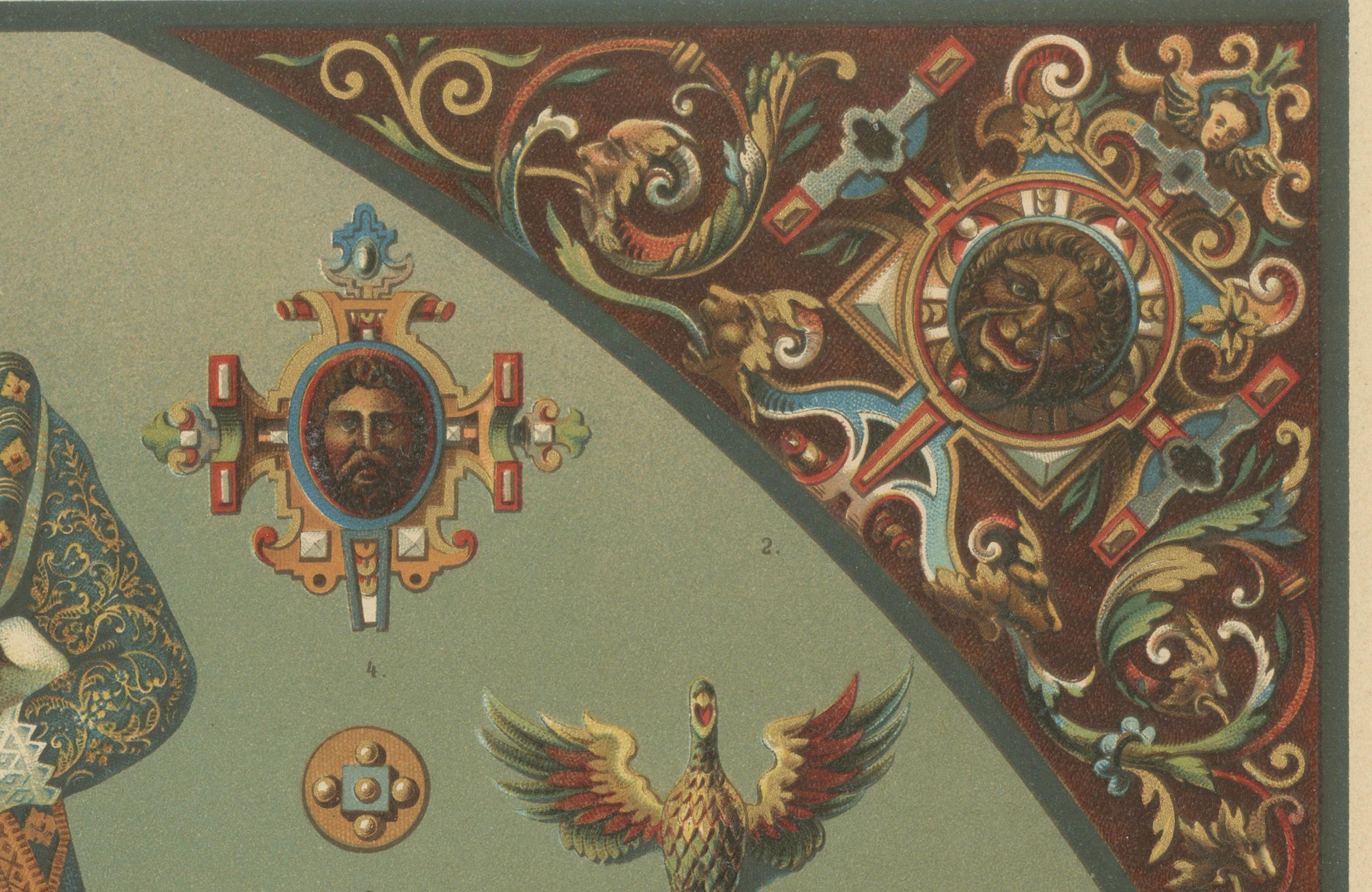
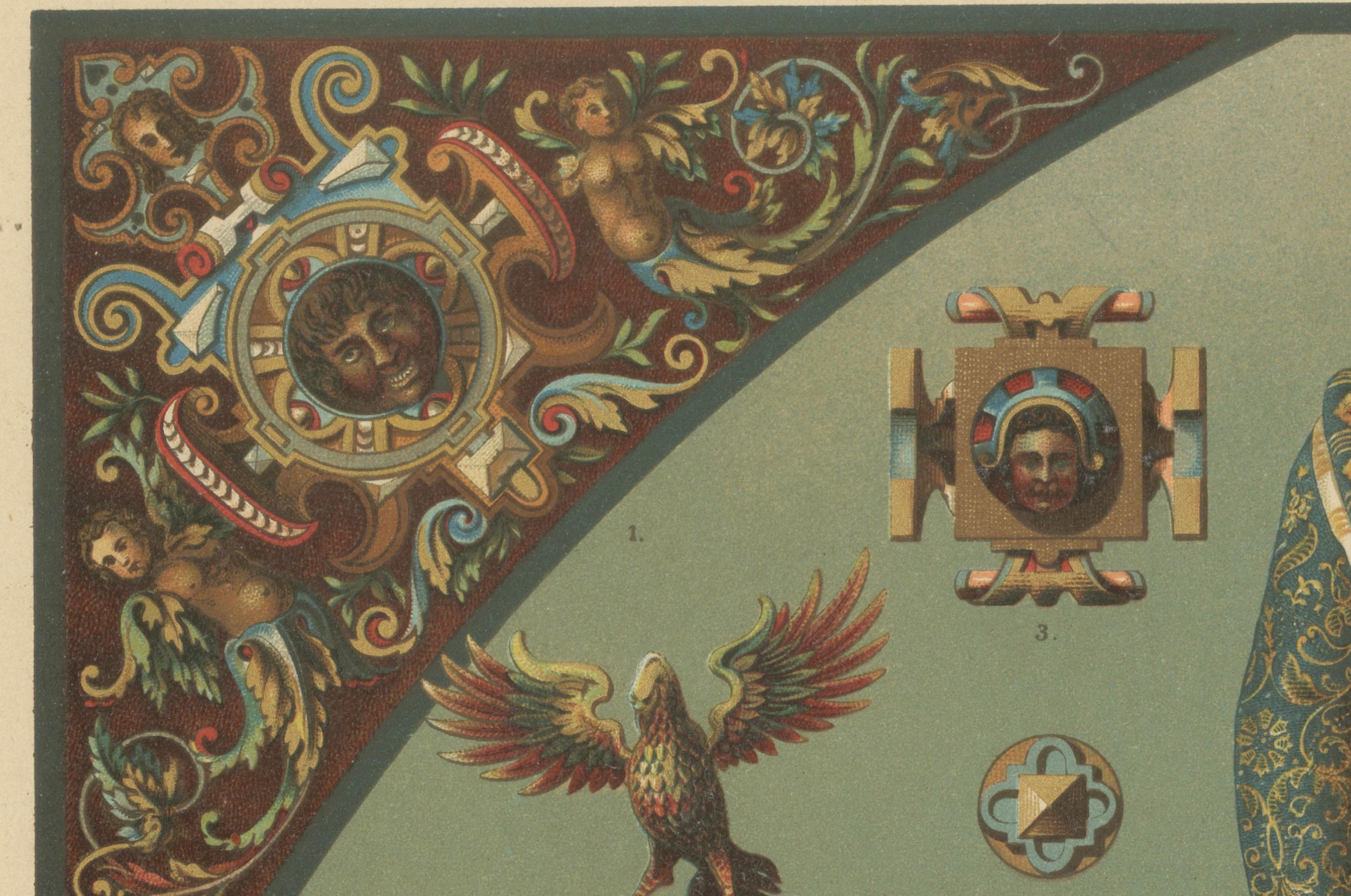
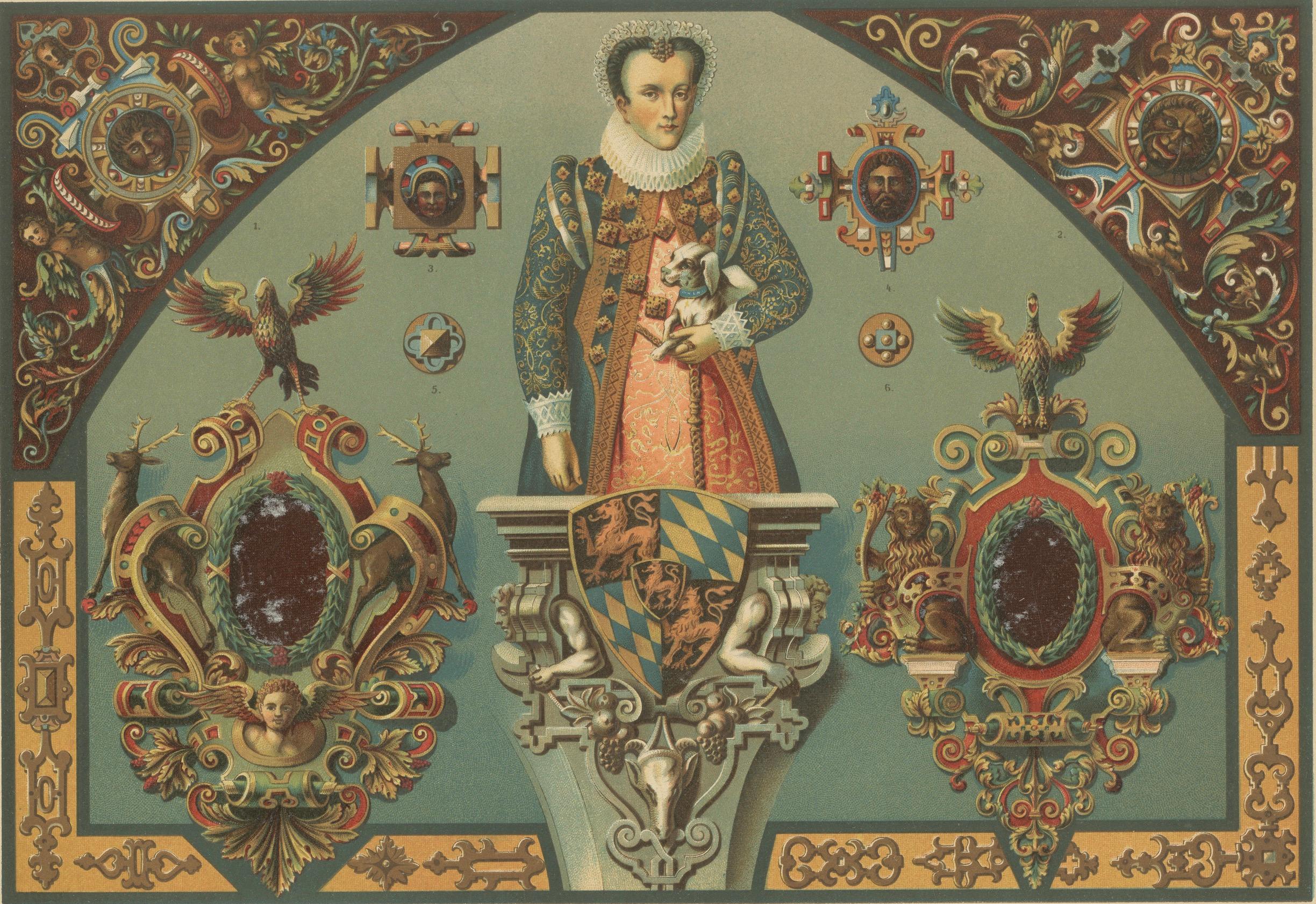
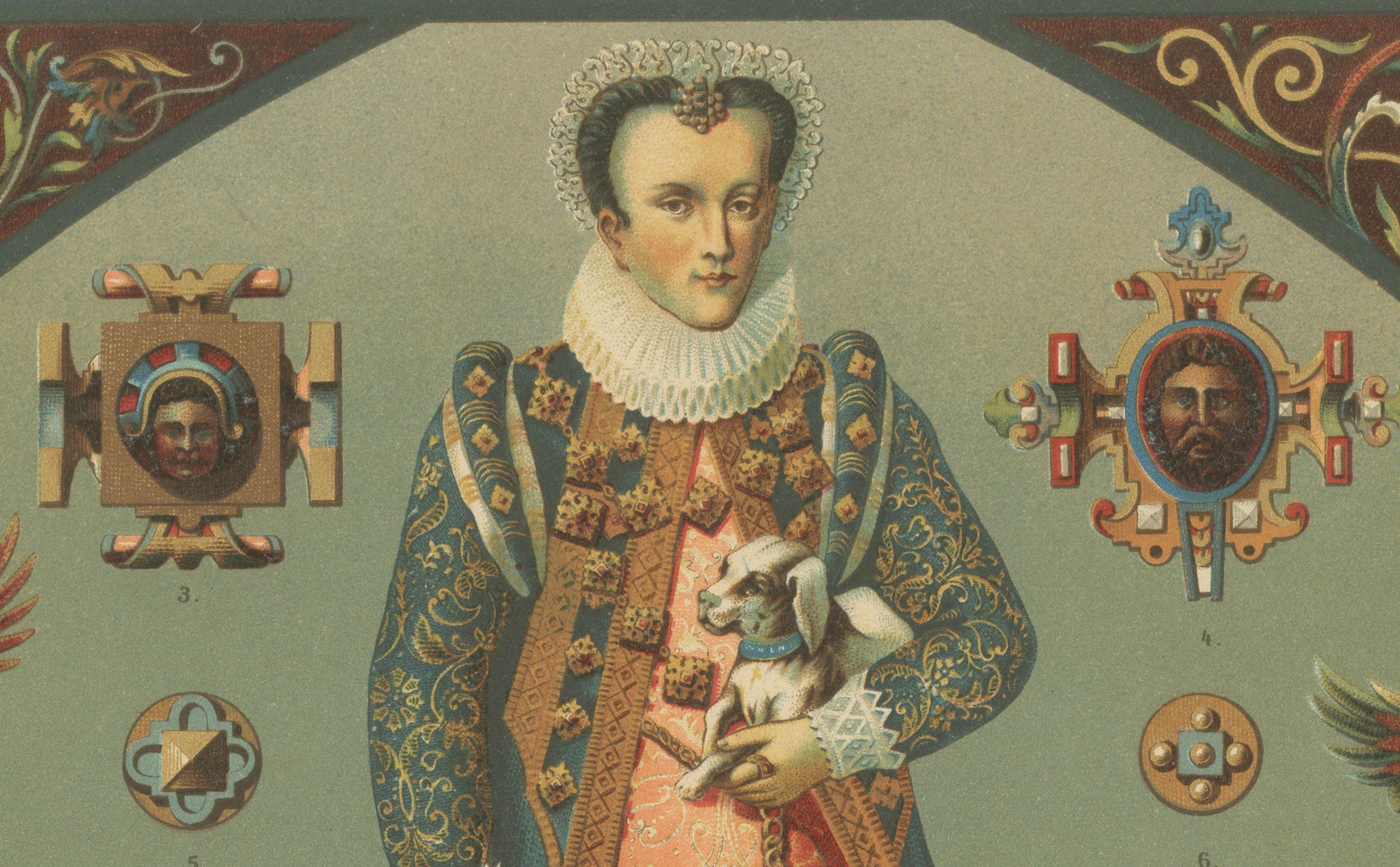
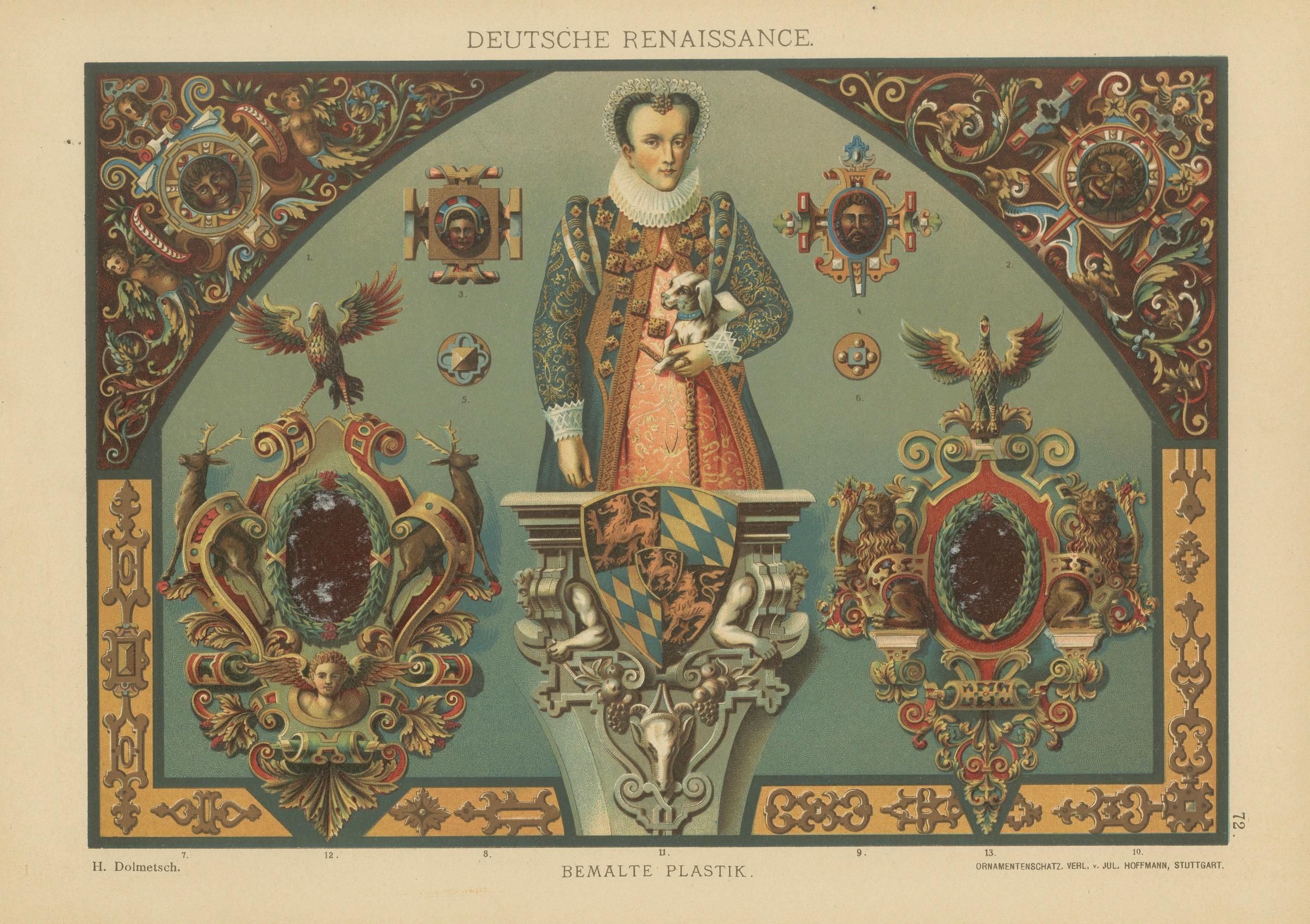
This print is an intricate depiction of German Renaissance art, focusing on painted sculptures and heraldic symbols. It is another splendid piece from H. Dolmetsch, featured in the "Ornamentenschatz" collection published by Jul. Hoffmann in Stuttgart. This particular collection, showcasing various historical decorative styles, was released in the late 19th century, likely aiming to preserve and celebrate European artistic heritage.
Appeal and Decorative Value:
The print stands out due to its vivid color palette and the detailed representation of the Renaissance aesthetic. It includes elements like painted sculptures, elaborate clothing, and intricate heraldry that exemplify the period's artistry. The use of symbolic imagery and rich decorations within the artwork highlights the Renaissance's emphasis on humanism, detailed craftsmanship, and the revival of classical learning and styles. This blend of historical accuracy and artistic embellishment makes these prints not only attractive but also invaluable as decorative pieces and educational resources on Renaissance art.
The technique shown in the print likely involves gold leaf application, which is one of the classic methods used to achieve a golden appearance in artworks, particularly from the periods shown (17th and 18th centuries). Here's how it typically works:
Gold Leaf Application Technique
1. **Preparation of the Surface:** The surface, whether it's paper, wood, leather, or metal, is prepared with a layer of gesso or another type of base coat to make it smooth and ensure better adhesion of the gold.
2. **Application of a Mordant:** A sticky substance called mordant, often an oil-based size or a water-based adhesive, is applied to the areas designated to receive the gold leaf. The mordant is crucial as it needs to be tacky enough to hold the delicate gold leaf but not so wet as to cause it to wrinkle or tear.
3. **Applying the Gold Leaf:** Thin sheets of gold leaf are carefully laid onto the prepared area with mordant. This is a delicate process, typically done with a special brush or tool, as gold leaf is extremely thin and fragile.
4. **Burnishing and Sealing:** Once the gold leaf is applied, it is gently burnished, or pressed down, to smooth out any wrinkles and ensure it adheres well to the surface details of the design. A sealant may be applied over the gold leaf to protect it from tarnishing and wear.
Visual Effect
The use of gold leaf in decoration provides a rich, reflective quality that can't be matched by gold paint or other imitations. The reflective properties of gold enhance the depth and dimension of the artwork, giving it a luxurious and vibrant look that is highly prized in decorative arts.
This technique was popular for its visual impact and durability, used extensively in the ornamental arts to create luxurious and appealing decorations that signified wealth and status.
When searching for prints like this one, which features German Renaissance decorative arts, people might use the following keywords to narrow down their search:
1. **German Renaissance art prints**
2. **Painted sculpture artwork**
3. **Renaissance heraldry designs**
4. **Historical costume prints**
5. **Antique heraldic art**
6. **16th century German decorations**
7. **Ornamental heraldic symbols**
8. **Renaissance decorative motifs**
9. **European art collection**
10. **H. Dolmetsch artwork**
These keywords focus on the artistic and historical aspects of the print, helping users find similar works that reflect the rich cultural and artistic heritage of the German Renaissance period.