About this sheet
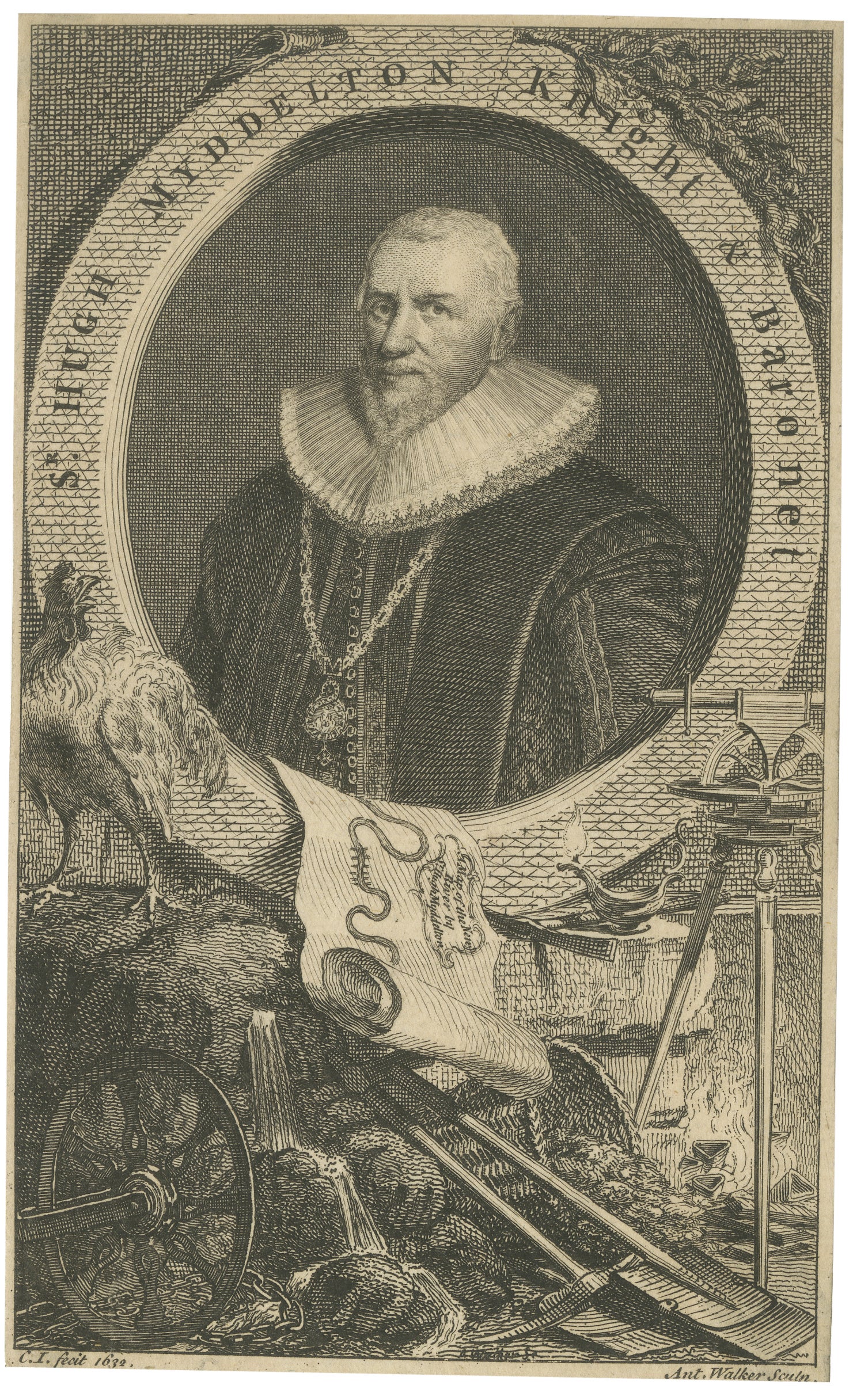
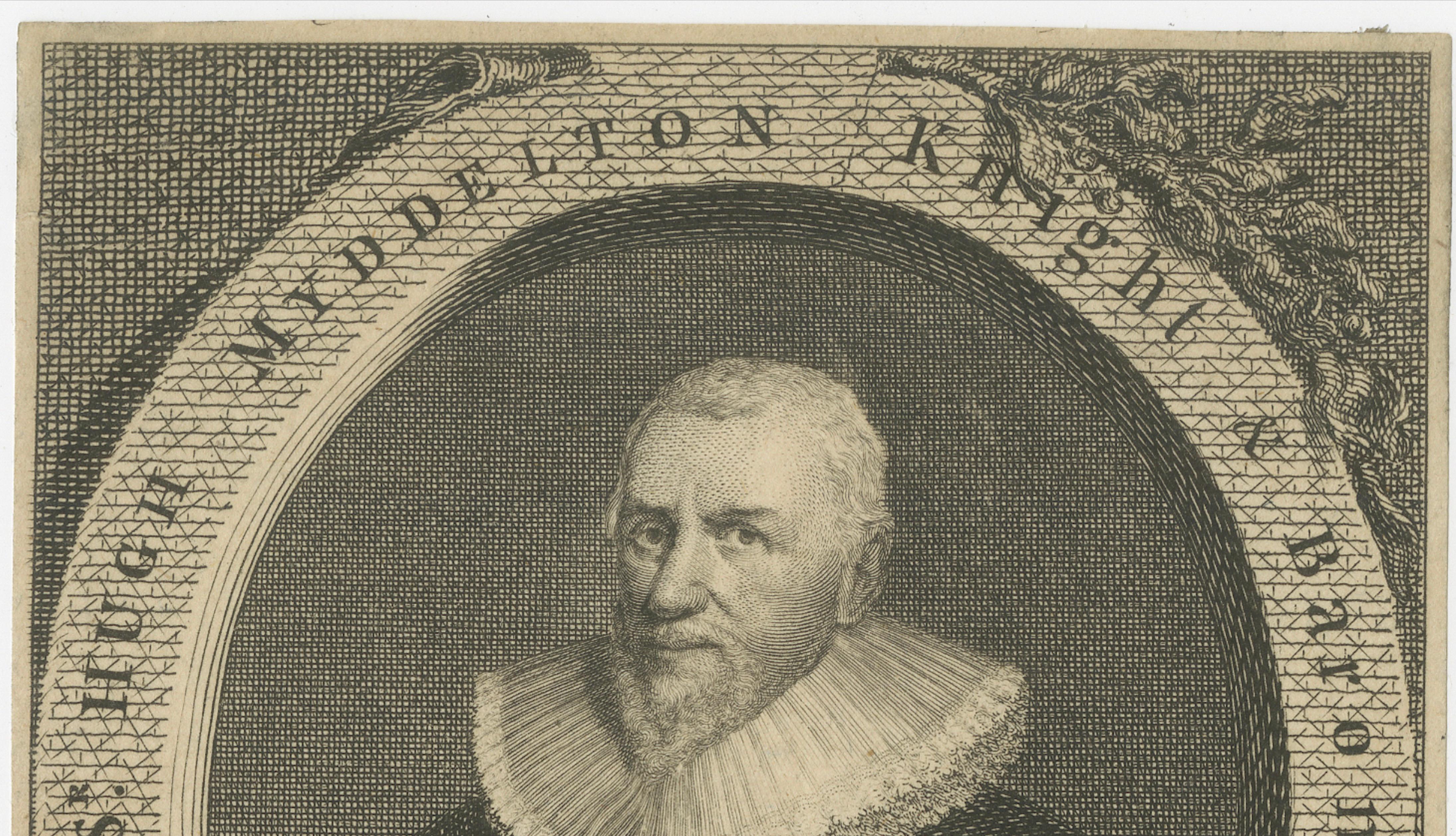
Small Portrait Engraving of Sir Hugh Myddelton after 1632 Portrait, ca.1750
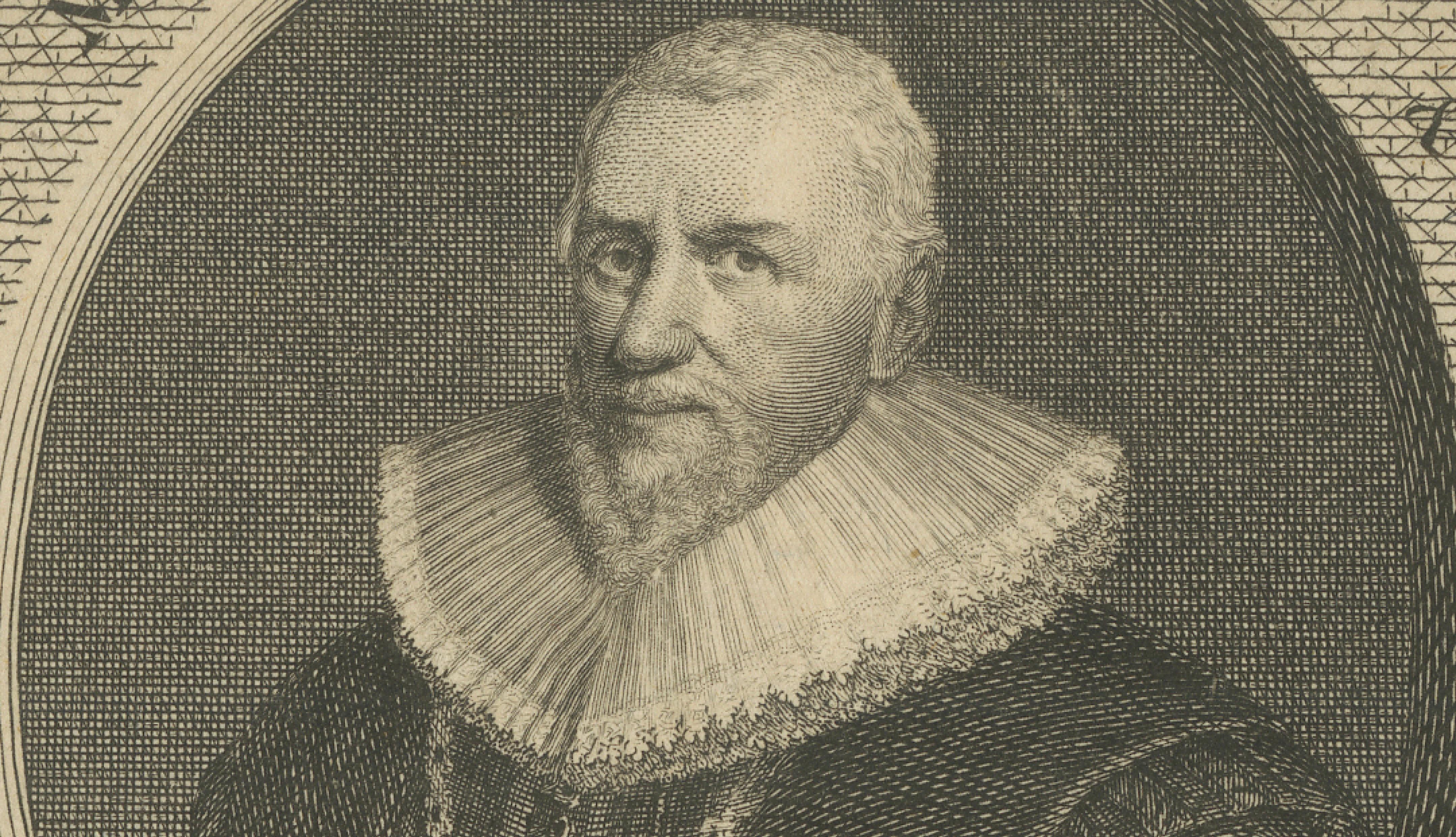
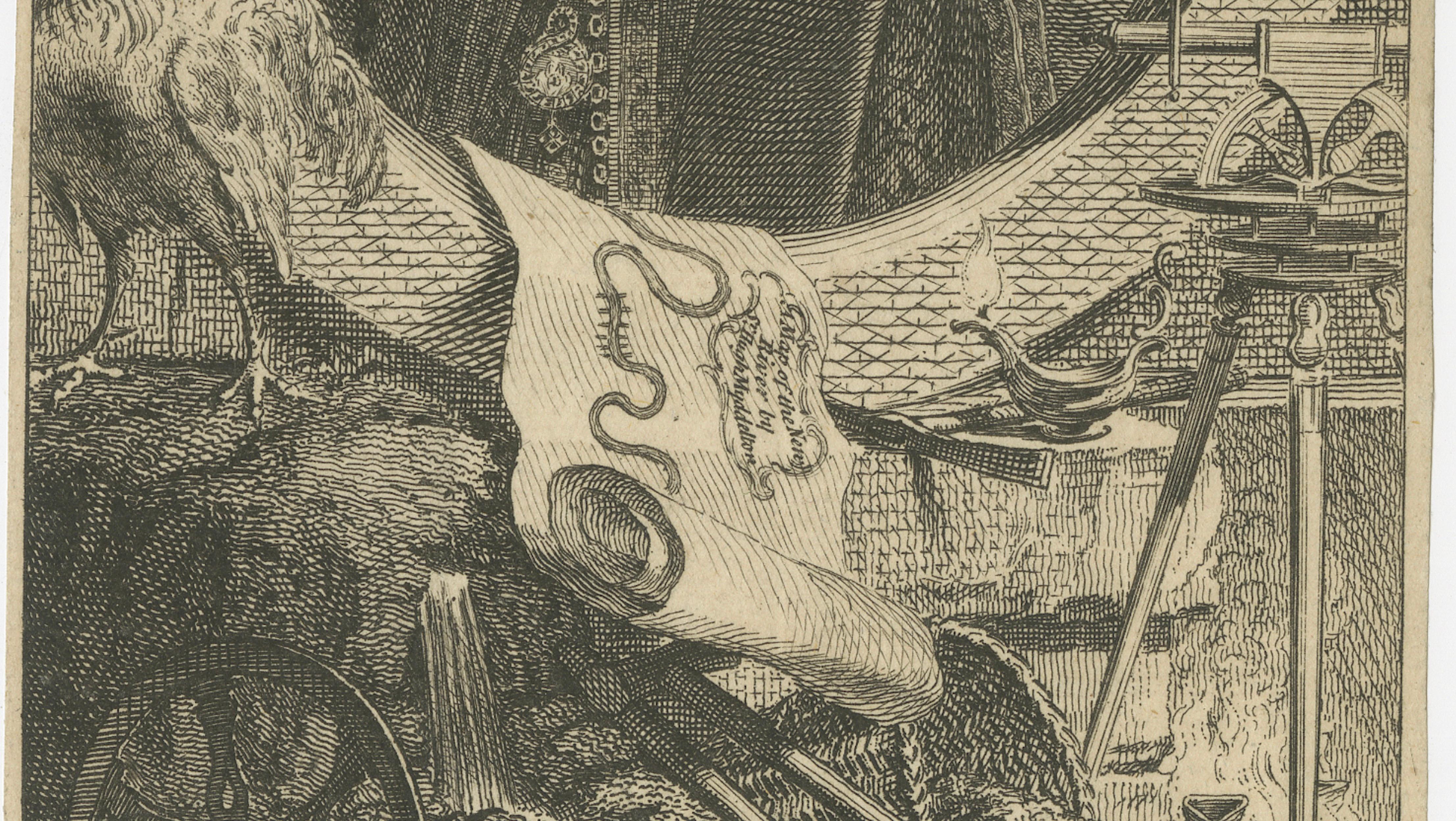
This richly detailed antique portrait engraving depicts Sir Hugh Myddelton, the celebrated Welsh engineer, entrepreneur, and creator of the New River project that transformed London’s water supply during the early 17th century. The composition presents Myddelton in formal dress with an elaborate ruff collar and chain of office, framed within an ornamental oval surrounded by symbolic engineering and scientific objects.
Sir Hugh Myddelton (1560–1631) became one of the great engineering figures of Stuart England through his ambitious New River scheme, completed in 1613. The project successfully transported fresh water from Hertfordshire into London, dramatically improving sanitation and daily life within the rapidly expanding capital. His achievement required extensive surveying, hydraulic planning, political negotiation, and enormous personal financial risk. King James I eventually supported the project, and Myddelton was later rewarded with a baronetcy.
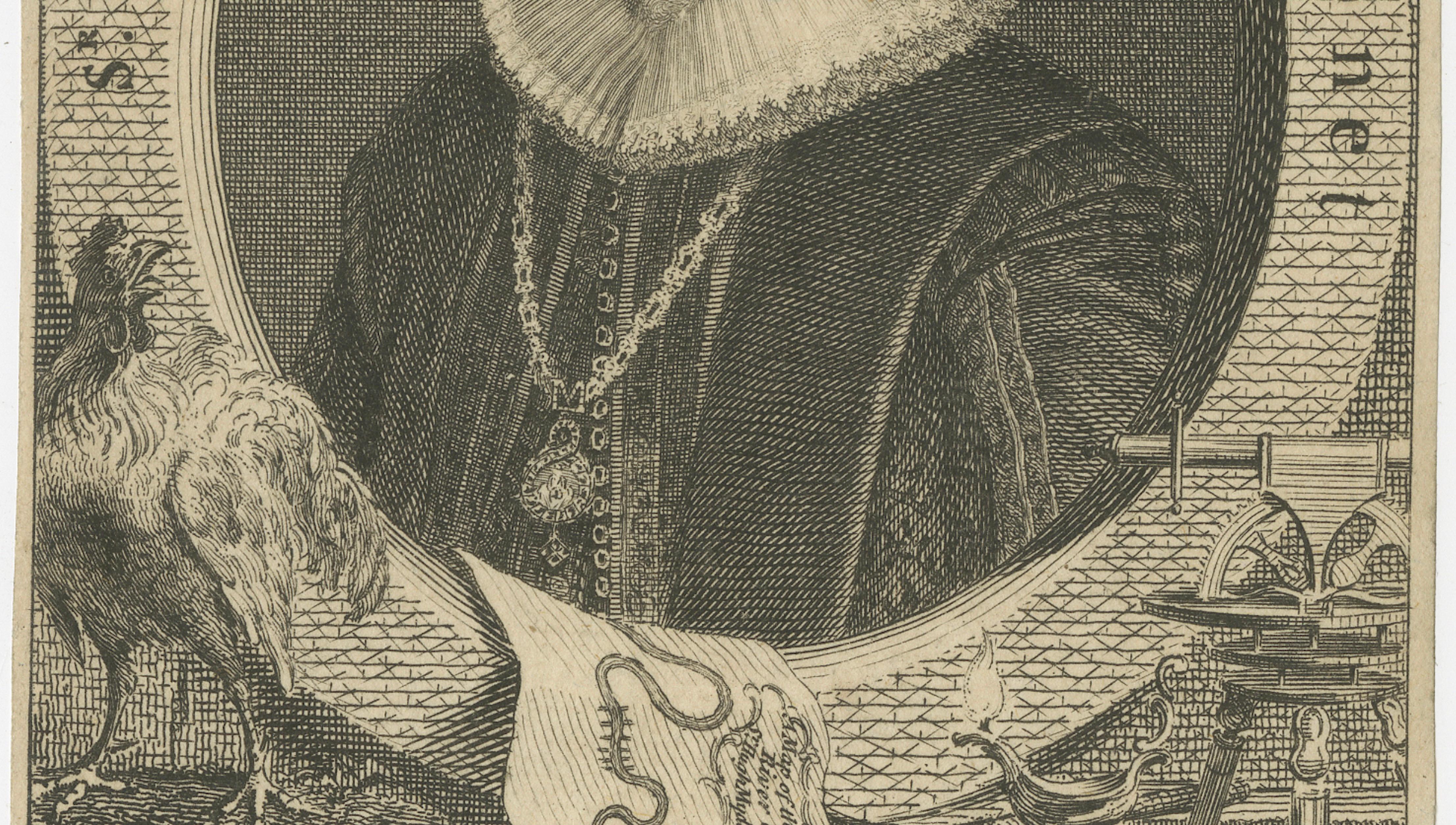
The engraving is especially attractive for its allegorical and technical decoration. Around the portrait appear surveying instruments, mathematical devices, maps, engineering tools, wheels, flowing water, and industrial motifs, all referring to Myddelton’s pioneering role in engineering and urban infrastructure. The inclusion of these symbolic elements makes the print visually engaging far beyond a conventional portrait.
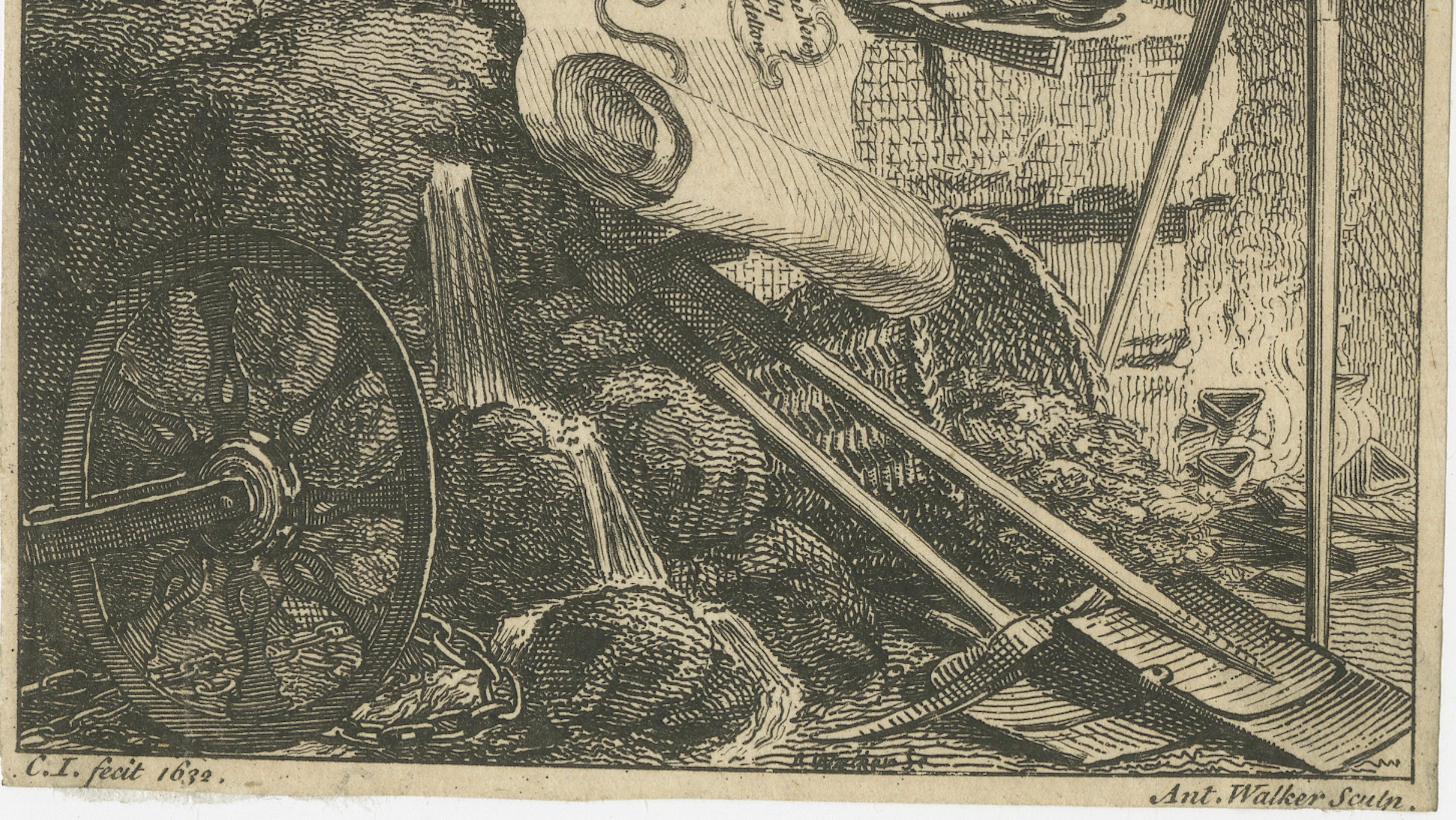
The lower margin bears the inscription “C.C. fecit 1632,” indicating that the composition derives from an earlier 17th-century portrait prototype dated 1632. The present engraving was later executed by the British engraver Anthony Walker (1726–1765), whose name appears in the lower right margin. Walker was known for his finely engraved historical and portrait works during the Georgian period, combining strong linear engraving with refined tonal contrasts.
Portraits of scientific innovators and engineers from this period remain comparatively uncommon and highly collectible today. The subject holds particular interest for collectors of London history, engineering, urban development, waterworks history, and early modern British portraiture.
Condition: Good condition overall for its age, with age toning, minor foxing, and light handling wear. Small edge imperfections and minor paper irregularities consistent with an 18th-century print. Strong dark impression with excellent engraved detail.
Framing tips: Particularly effective in a dark walnut, black lacquer, or antique gilt frame with a warm ivory mat. The intricate engraved detail displays especially well under museum glass in a study, library, or classical interior.
Technique: Copper engraving
Maker: Anthony Walker after a 1632 portrait prototype, England, 18th century