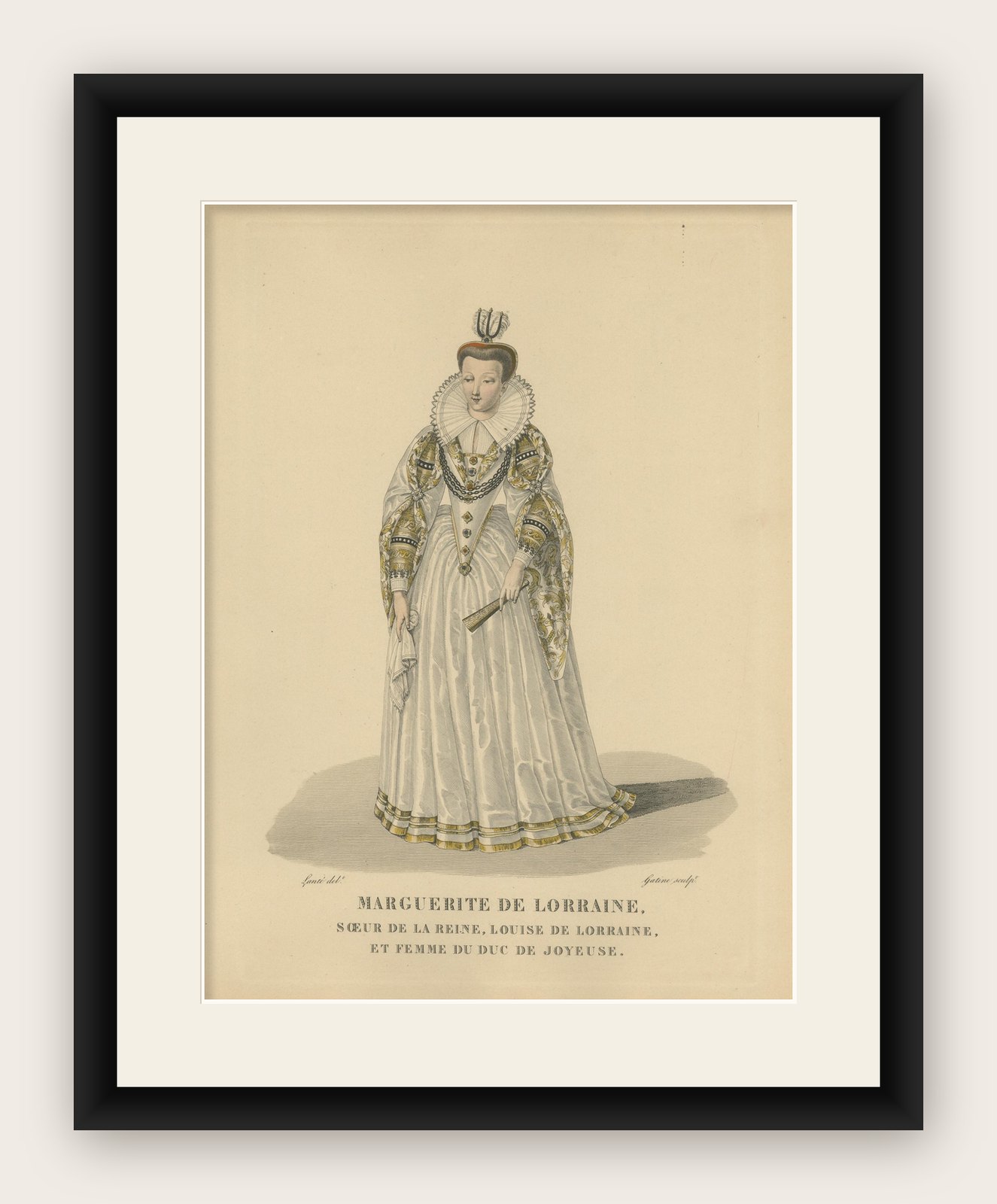
Marguerite de Lorraine, Duchess of Joyeuse, handcolored engraving, ca. 1900
€ 290
Original antique · The actual sheet photographed · Certificate of authenticity on request · Sold unframed · Worldwide shipping from € 15 (rates)
Date
1900
Mapmaker / artist
Georges Jacques Gatine after Louis Marie Lanté, reprint Paris, ca. 1900
Technique
Handcolored engraving
Sheet size
33.5 × 25 cm (13.2 × 9.8 in)
Reference
BG-13158-25
What the condition grades mean
Excellent
Bright and clean, with no faults worth mentioning.
Very good
Only light signs of age, such as faint toning.
Good
Normal signs of age for a sheet of this period: toning, some foxing, small marks or neat old repairs.
Fair
Clear faults such as staining, tears or repairs, priced to match.
Every fault we see is written in the condition note, and the whole sheet is shown uncropped in the photos.
Condition
Very good. General light age toning. Small spots in the margin, not affecting the image. Strong hand coloring, blank verso.
About this sheet
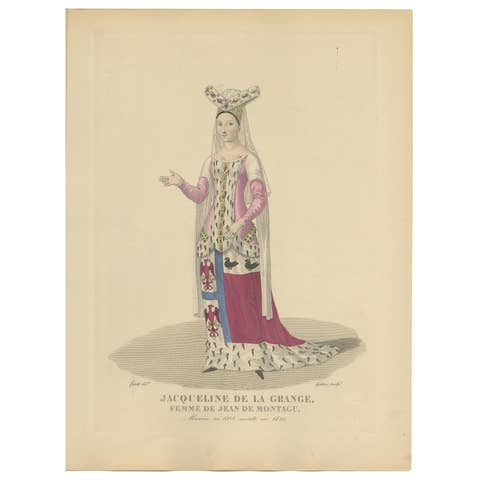
Marguerite de Lorraine, Duchess of Joyeuse, handcolored engraving, ca. 1900
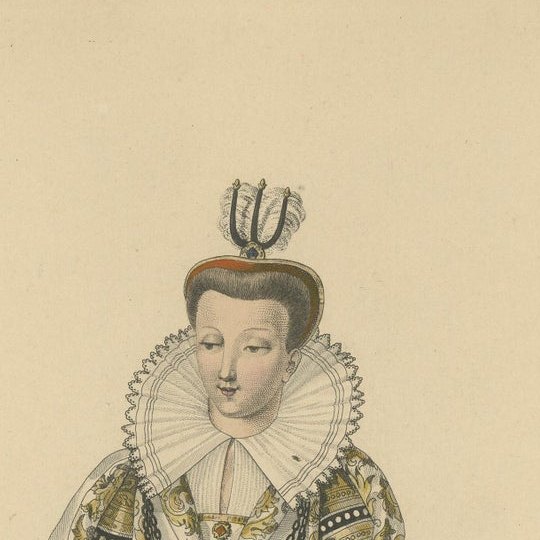
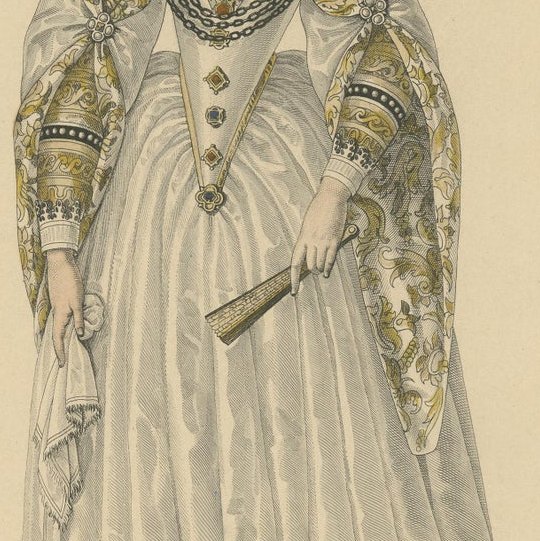
Handcolored engraving of Marguerite de Lorraine (1564–1625), sister of Louise de Lorraine, Queen of France, and wife of Anne de Joyeuse, Duke of Joyeuse, one of the favorites of King Henri III. She is shown in sumptuous Renaissance dress, wearing a tall headdress, an upright lace collar, and a voluminous gown of white and gold, richly embroidered with detailed patterns on the sleeves and bodice. She holds a fan delicately in her right hand, while a lace handkerchief is tucked in the other.
This engraving is a reprint from around 1900, after the celebrated series Galerie Française de Femmes Célèbres originally published in Paris in 1827. Created by Georges Jacques Gatine after designs by Louis Marie Lanté, these portraits were based on costume sources collected by Roger de Gaignières, the antiquarian whose extensive portfolio preserved many portraits of French nobility.
Marguerite’s portrayal emphasizes both elegance and the formality of French court life at the end of the 16th century. The crisp detail, careful hand coloring, and historical costume make this print an appealing decorative piece and a valuable reference for students of French fashion and portraiture.
Framing tips: A cream or ivory mount will accentuate the pale tones of the gown, while a gilt frame will bring out the golden embroidery. A dark wood frame could add contrast and highlight the fine lace and jewelry details.