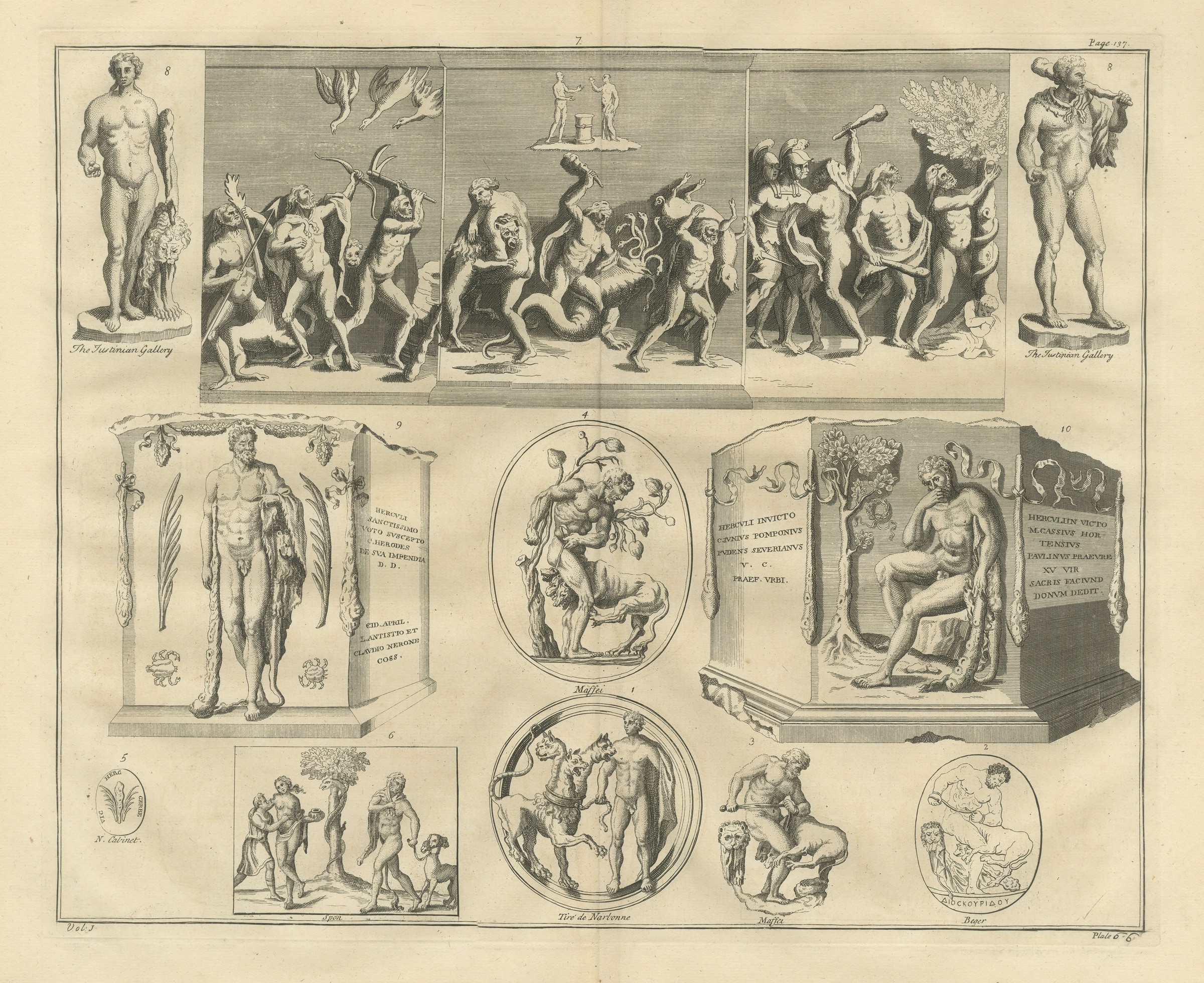
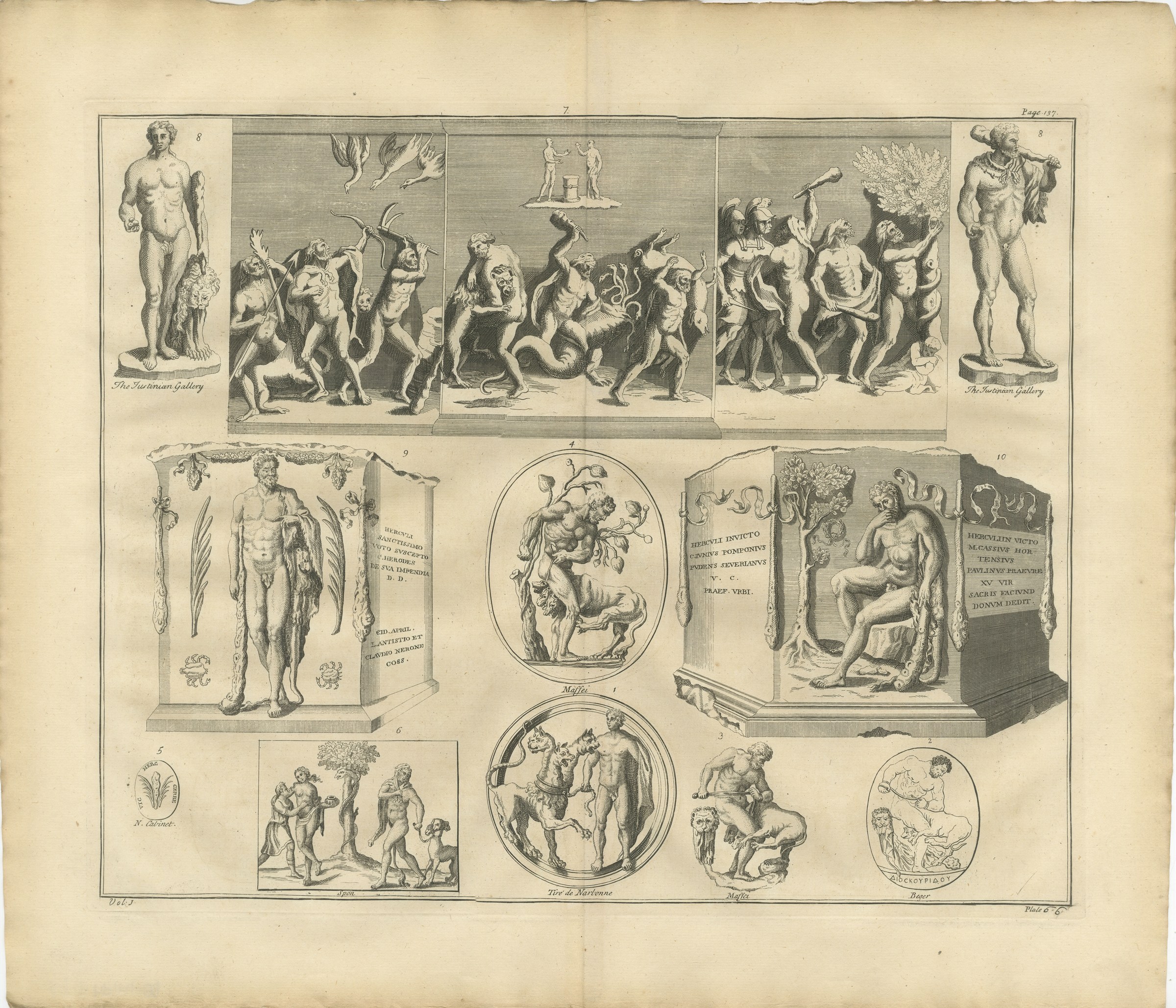
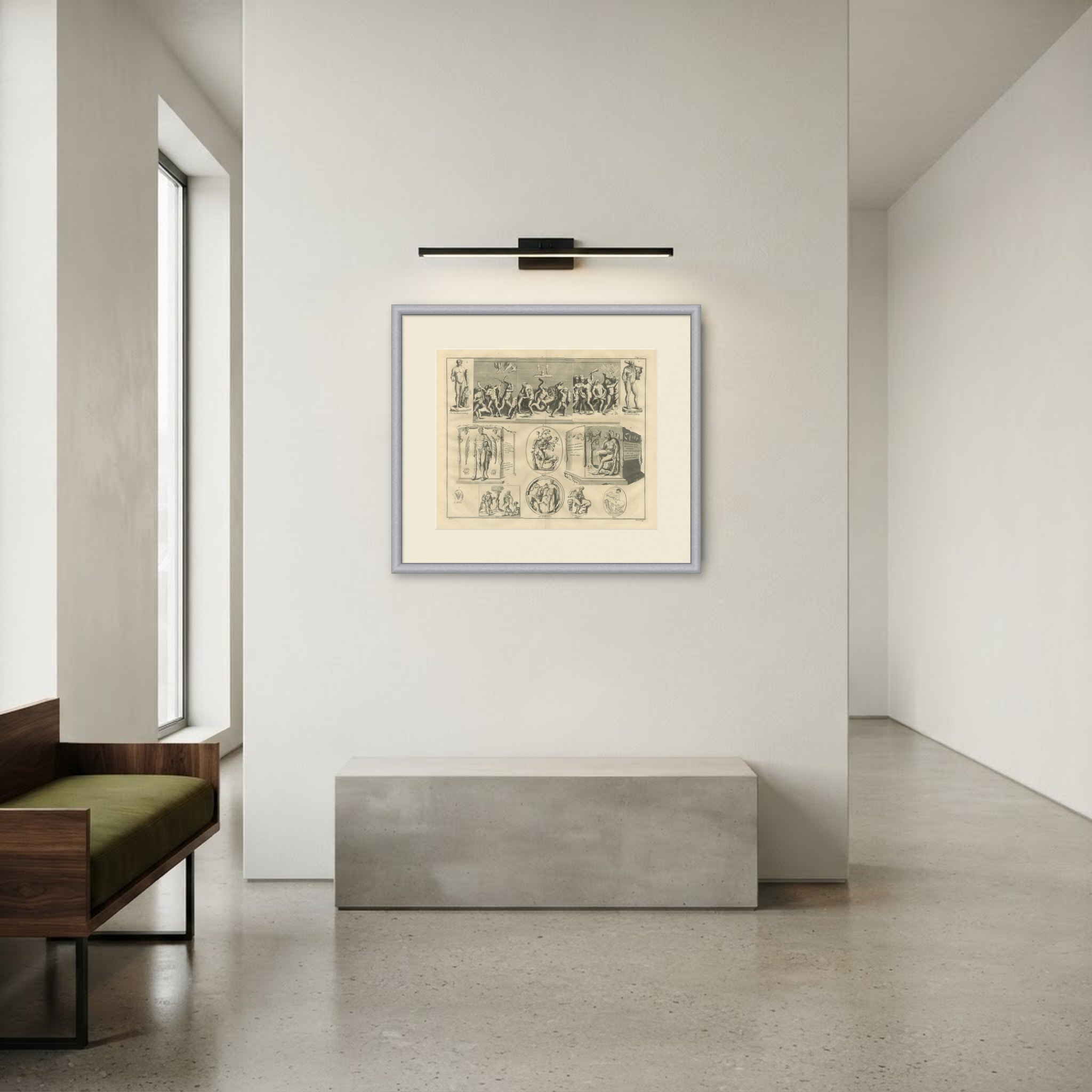
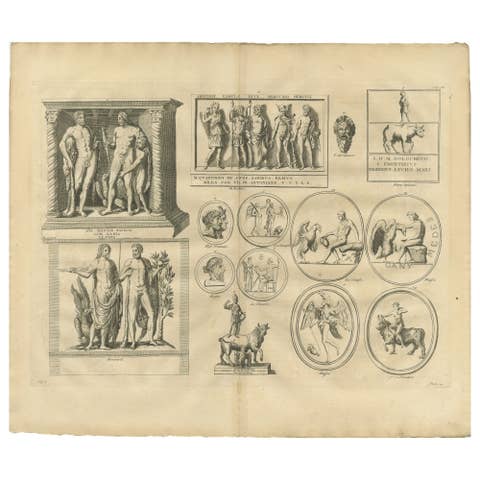
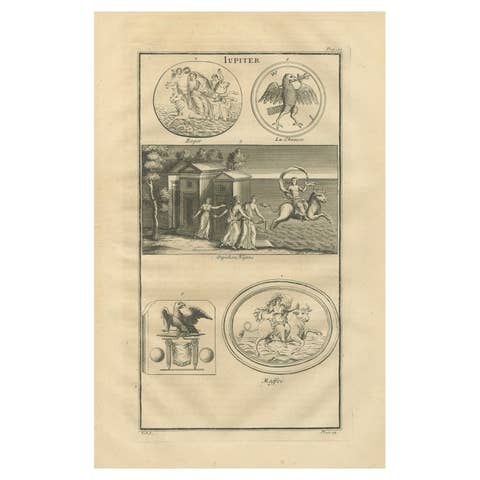
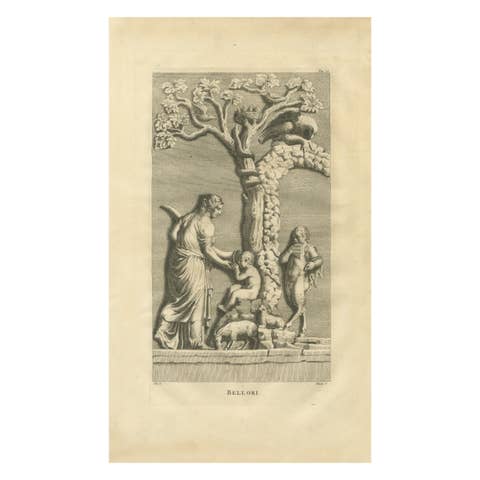
Hercules and Cerberus, Antique Engraving of Roman Statues and Altars, 1721
€ 415
Original antique · The actual sheet photographed · Certificate of authenticity on request · Sold unframed · Worldwide shipping from € 15 (rates)
Date
1721
Mapmaker / artist
Not named on the sheet
Publisher
J. Tonson and J. Watts, London
Technique
Copper Engraving
Coloring
Uncolored
Sheet size
42 × 49 cm (16.5 × 19.3 in)
Condition
Good
Reference
BG-14184-1-67
What the condition grades mean
Excellent
Bright and clean, with no faults worth mentioning.
Very good
Only light signs of age, such as faint toning.
Good
Normal signs of age for a sheet of this period: toning, some foxing, small marks or neat old repairs.
Fair
Clear faults such as staining, tears or repairs, priced to match.
Every fault we see is written in the condition note, and the whole sheet is shown uncropped in the photos.
Condition
Moderate overall age toning, with the paper darker along the top and bottom edges, foxing through the margins, one or two spots larger than the rest and a vertical fold down the middle where the sheet was folded into the book.
About this sheet
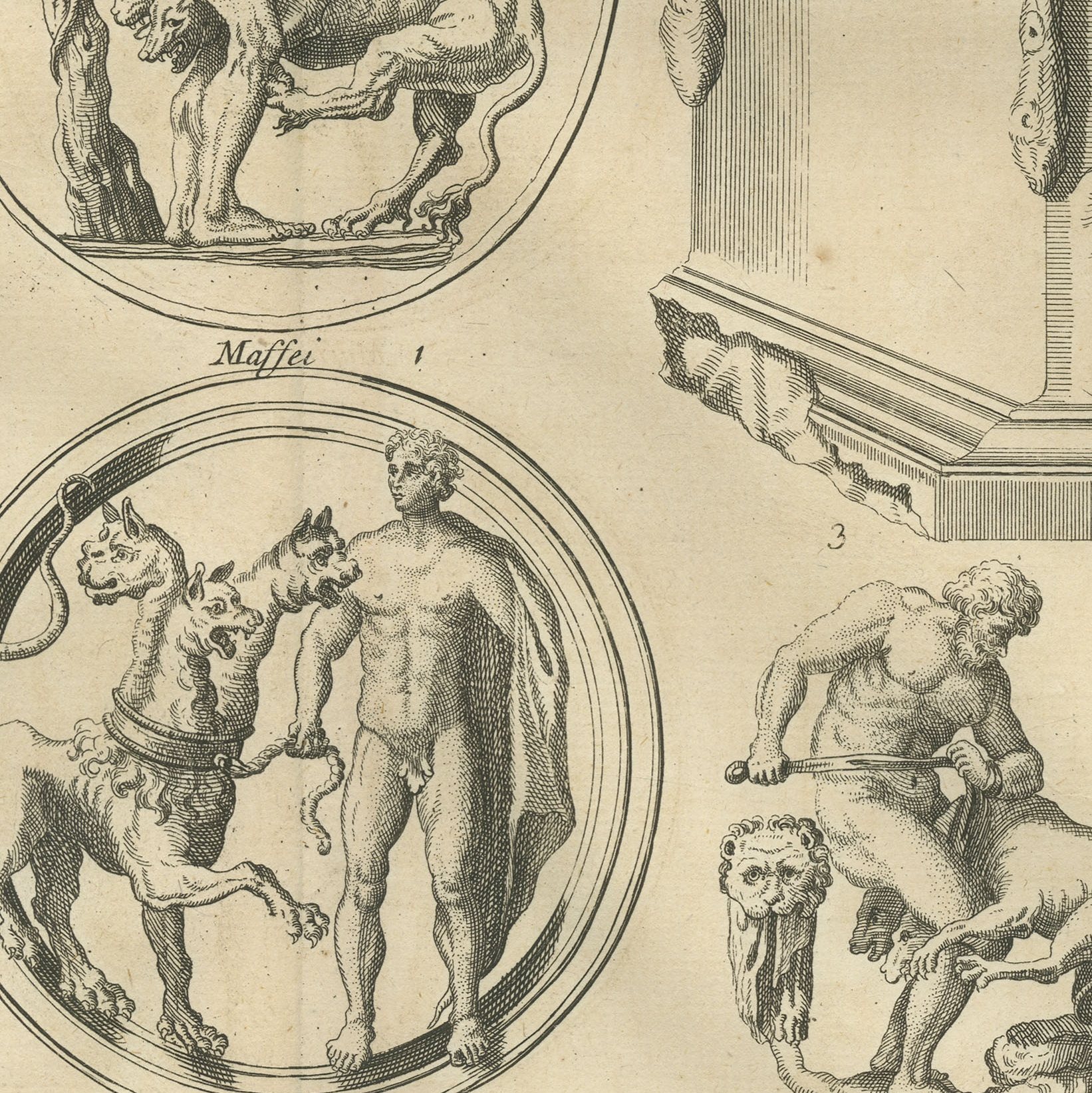
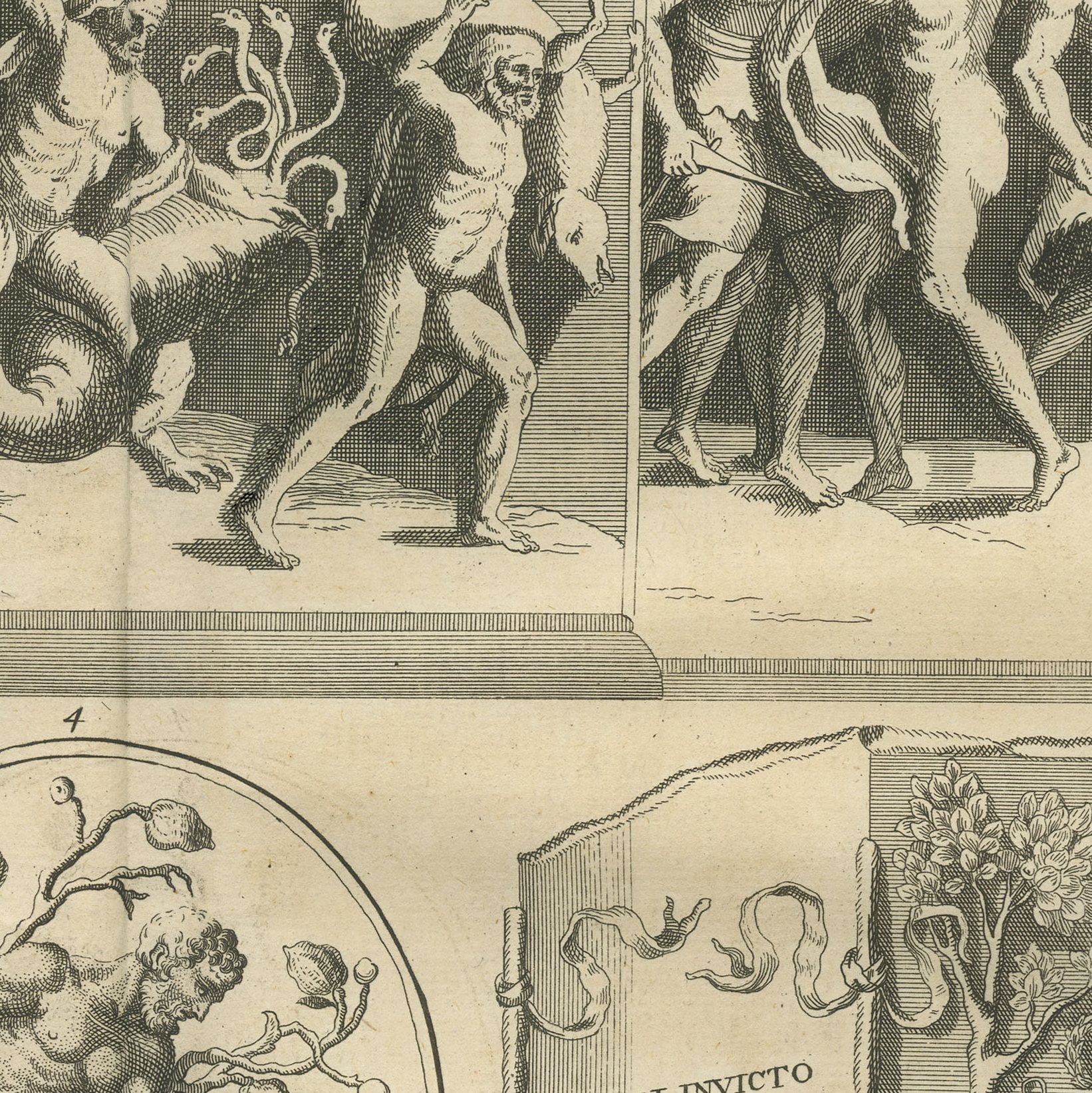
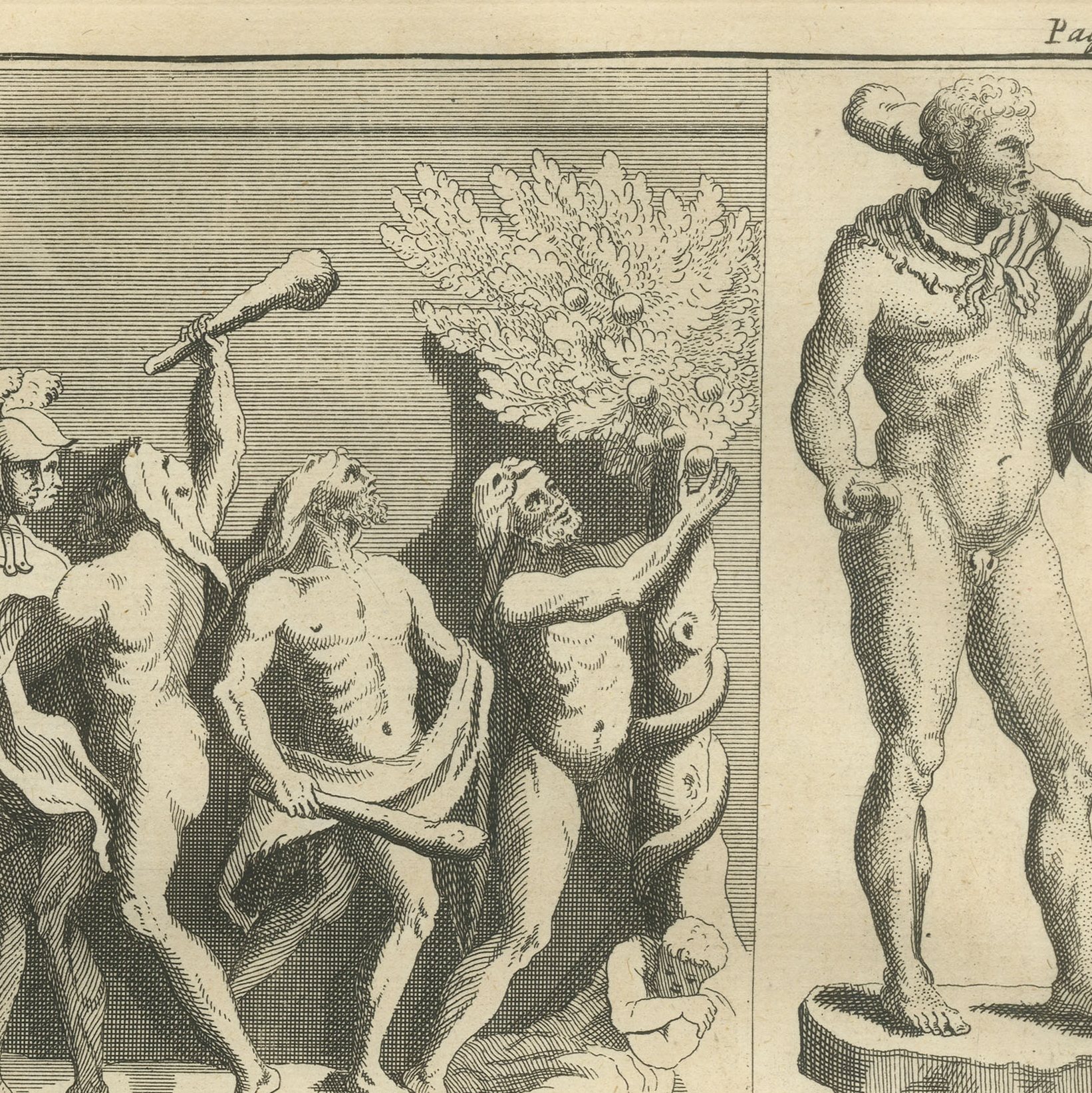
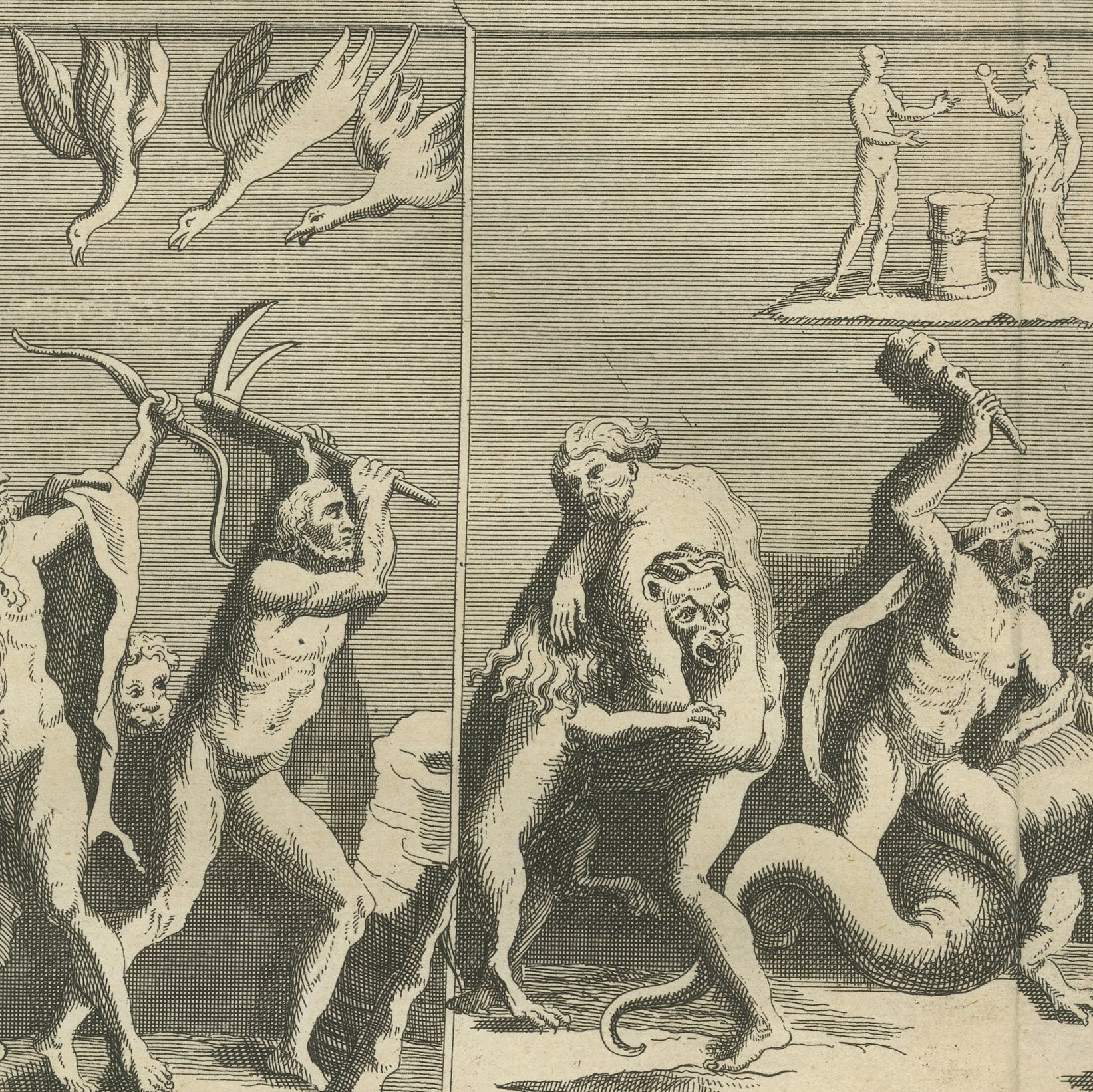
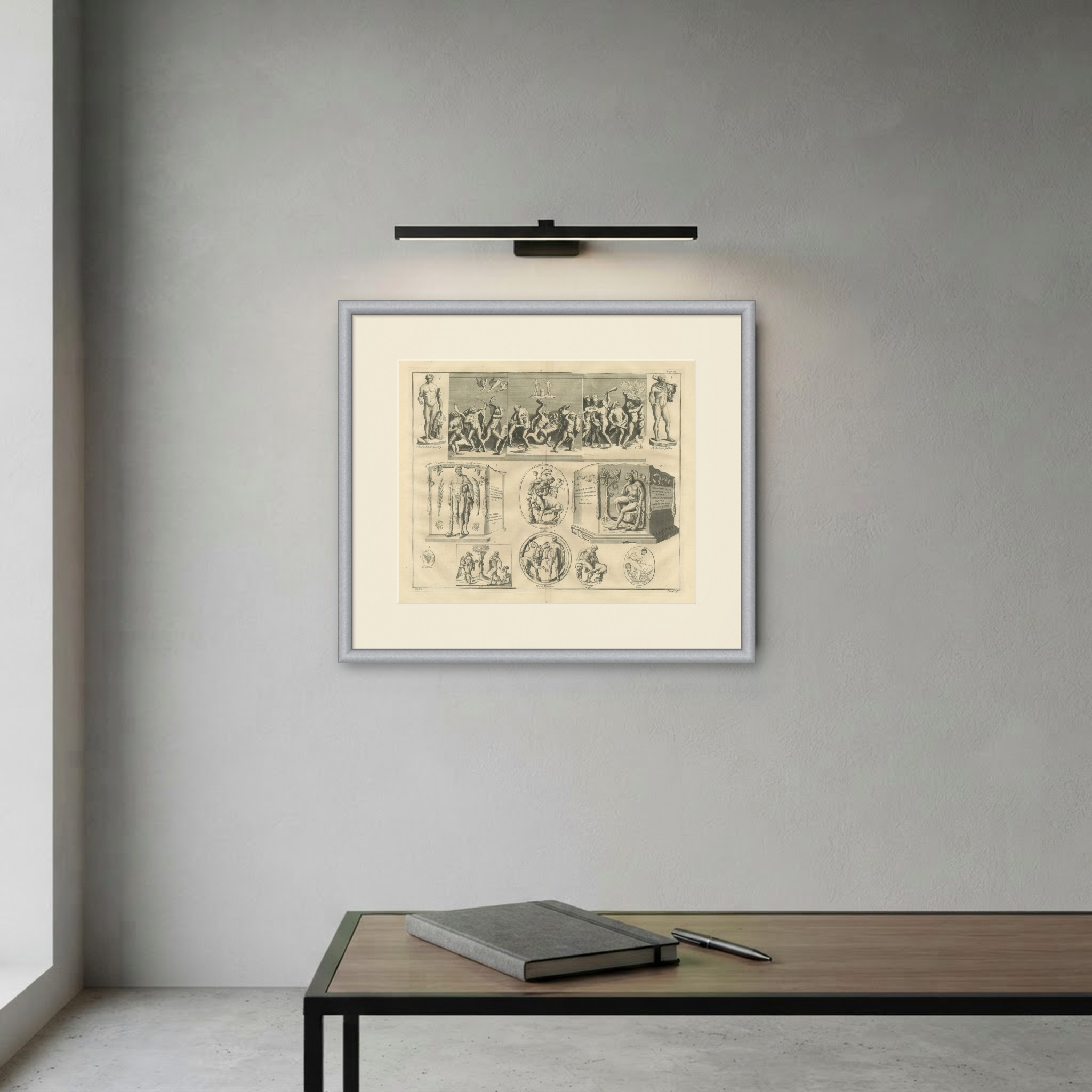
This original antique print of 1721 spreads the Hercules material across a wide double page sheet. The hero appears full length as a standing marble from the Justinian Gallery, again leading the three headed dog Cerberus up from the underworld, and in a series of smaller figures with the club, the bow and the lion skin. Between them stand inscribed altars whose lettering is fully engraved, among them HERCVLI SANCTISSIMO, HERCVLI INVICTO set up by Cinnius Pomponius, and a dedication by Marcus Cassius Hortensius Paulinus. Long narrow friezes of struggling figures, giants and bacchic revellers run along the upper and lower edges, copied from sarcophagi and from the published cabinets of Maffei and Boissard. Every figure carries its number to Montfaucon's text, and the lower corners of the plate are lettered Vol. I and Plate 66, with the page of the facing text at the upper right.
The plate comes from Volume the First of Antiquity Explained, and Represented in Sculptures, the English translation of L'Antiquité expliquée et représentée en figures, published in Paris in 1719 by Bernard de Montfaucon (1655 to 1741), a French Benedictine monk of the Congregation of Saint Maur. The translation is by David Humphreys, fellow of Trinity College, Cambridge, and was printed in London by J. Tonson and J. Watts in five folio volumes, the first two dated 1721 and the other three 1722. The first volume deals with the gods of the Greeks and Romans and with the heroes raised to divinity. Montfaucon arranged the surviving images of ancient monuments by subject, so that each plate gathers figures copied from statues, reliefs, altars, gems, coins and other objects, numbered to his commentary. The plates carry no engraver's name and no printed title.
The sheet is lettered with its volume and plate number, Vol. I and Plate 66, and with the page of Montfaucon's text that it faces.
Moderate overall age toning, with the paper darker along the top and bottom edges, foxing through the margins, one or two spots larger than the rest and a vertical fold down the middle where the sheet was folded into the book.
This is an original antique print, not a modern reproduction. This item is sold unframed. Any framed or interior images are shown for presentation and inspiration only, unless the listing explicitly states that the item is sold framed.