About this sheet
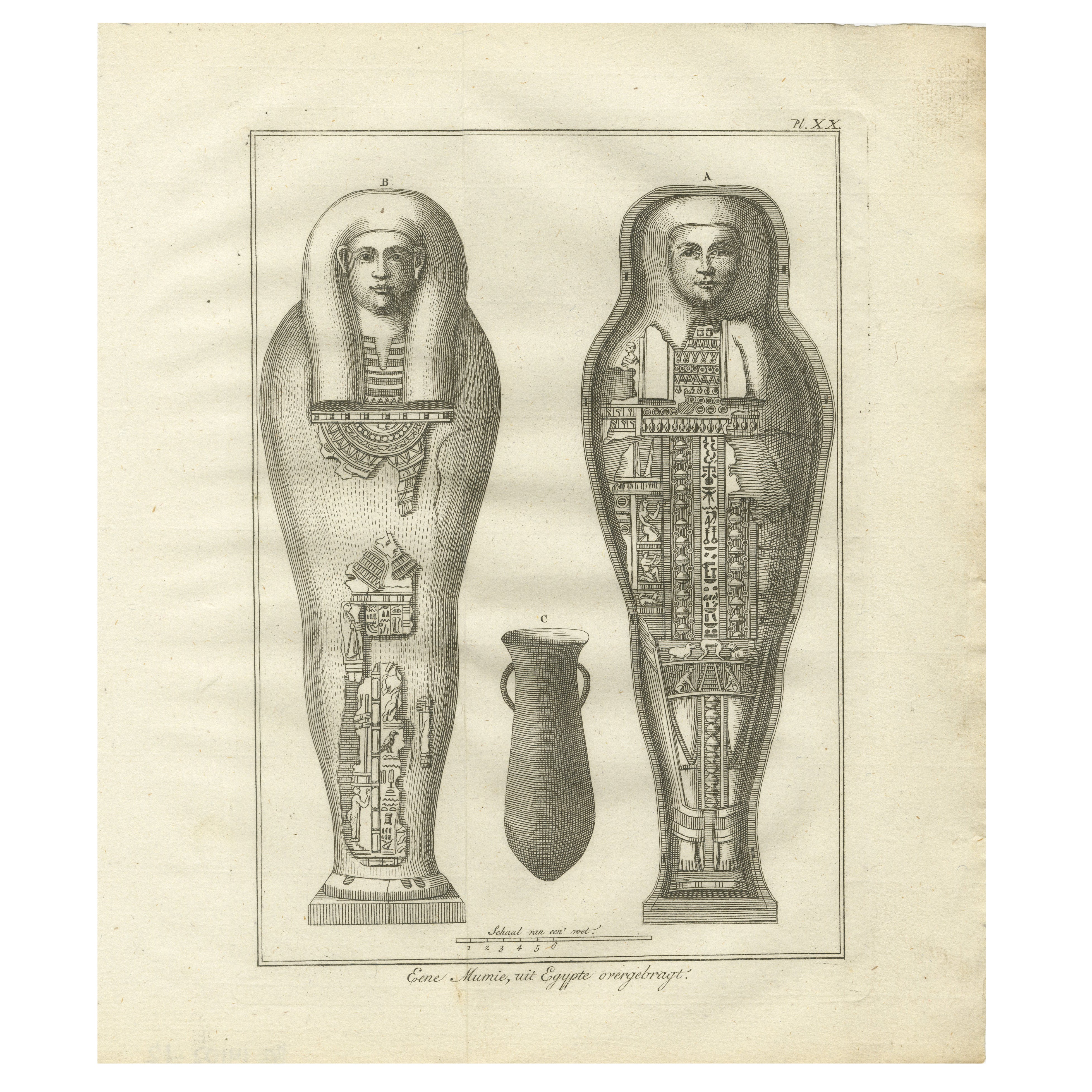
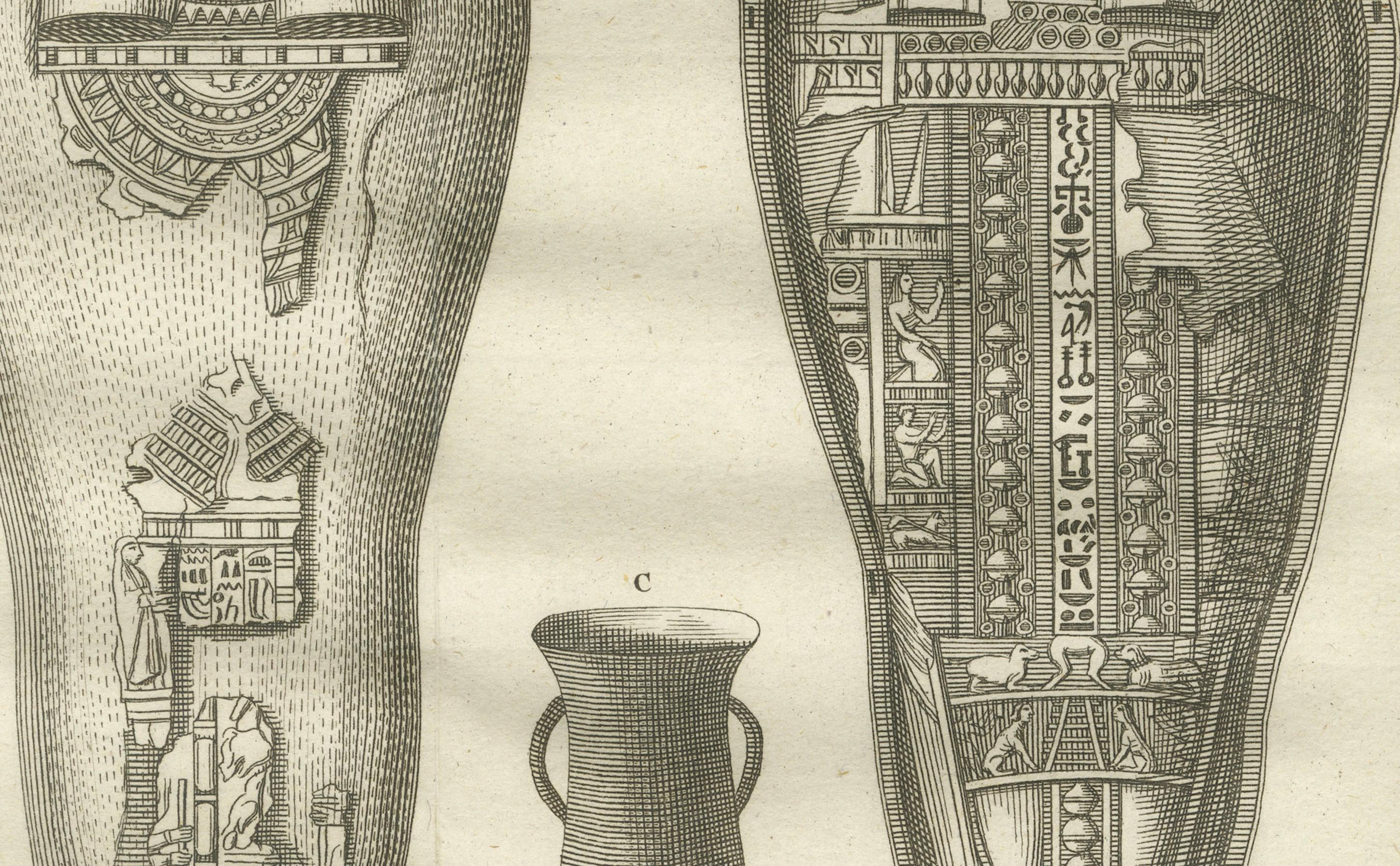
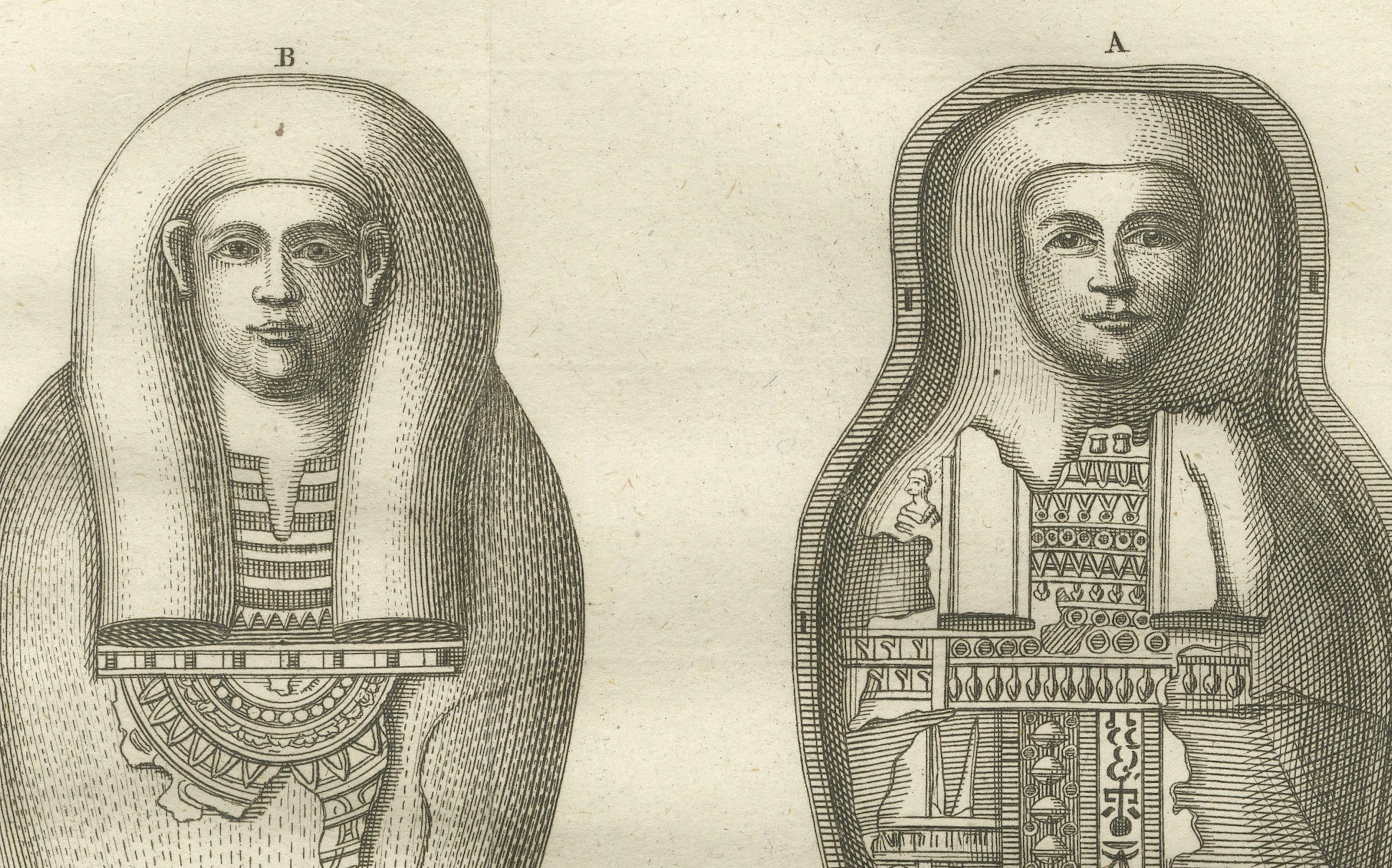
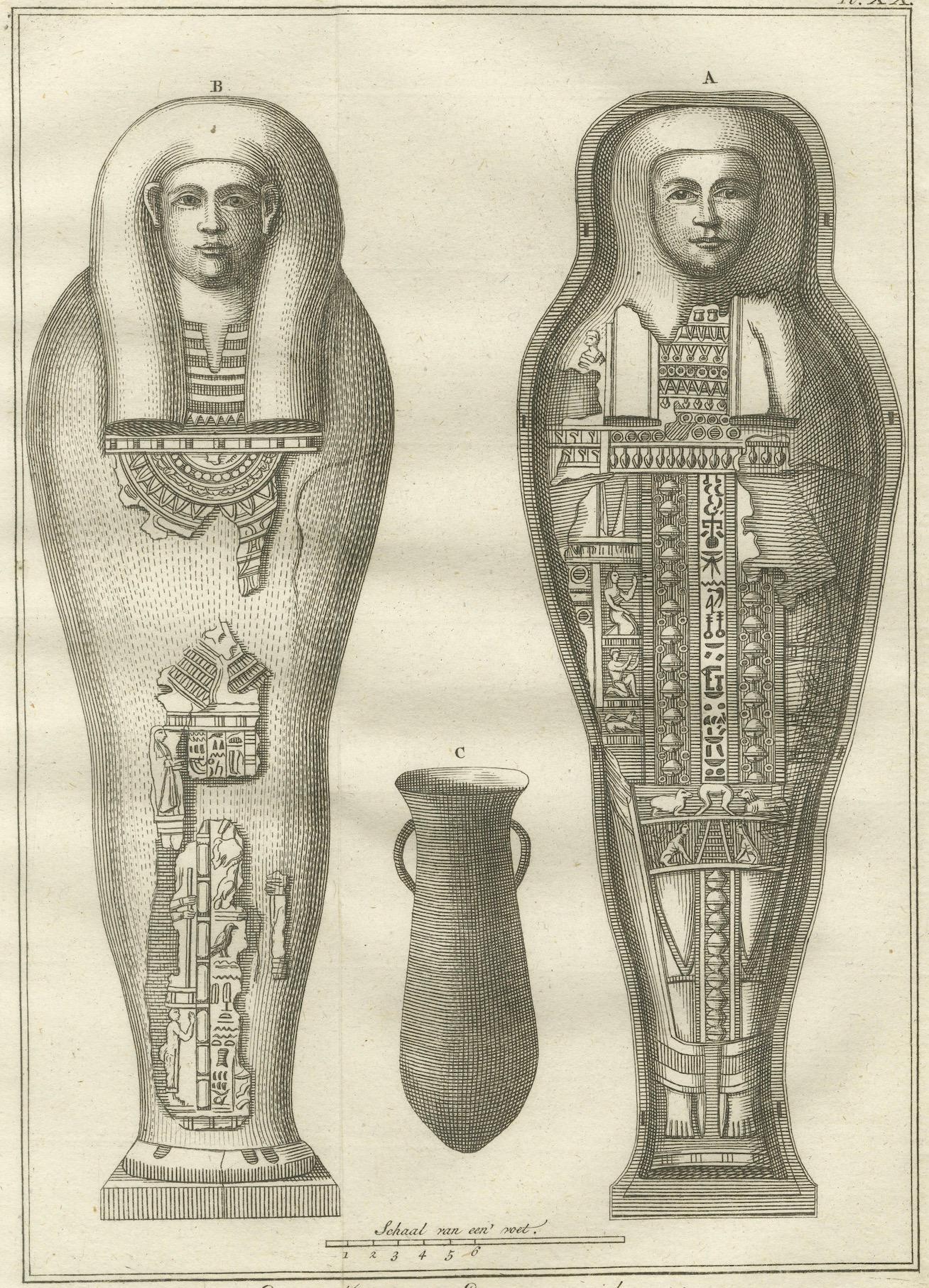
This striking 1776 engraving presents a detailed depiction of an Egyptian mummy, its sarcophagus, and a funerary vessel, based on artifacts transported from Egypt to Europe during the 18th century. Numbered Plate XX, the image comes from the Dutch edition of Richard Pococke’s illustrated travel account, an influential work that introduced many European readers to the visual culture of ancient Egypt.
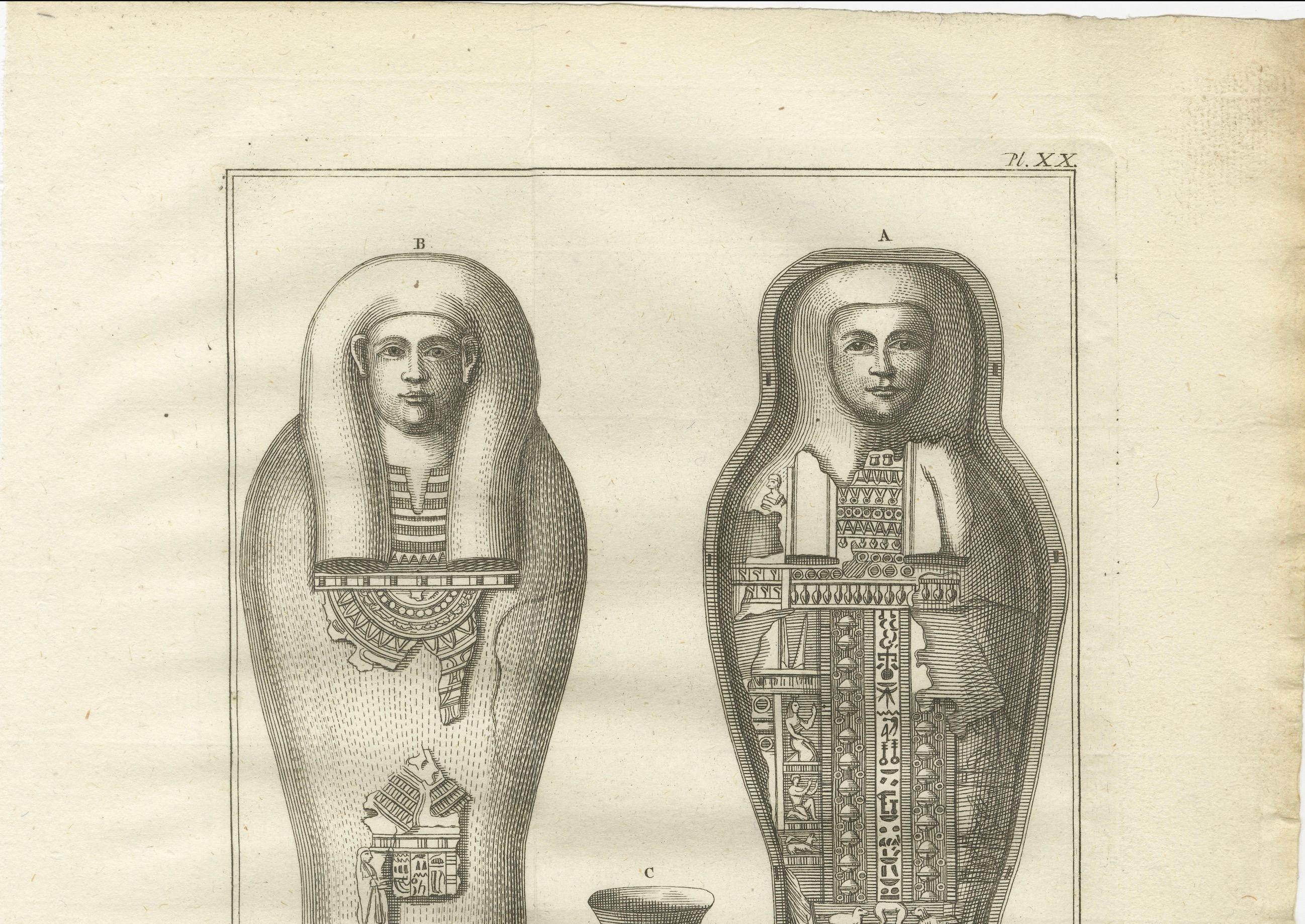
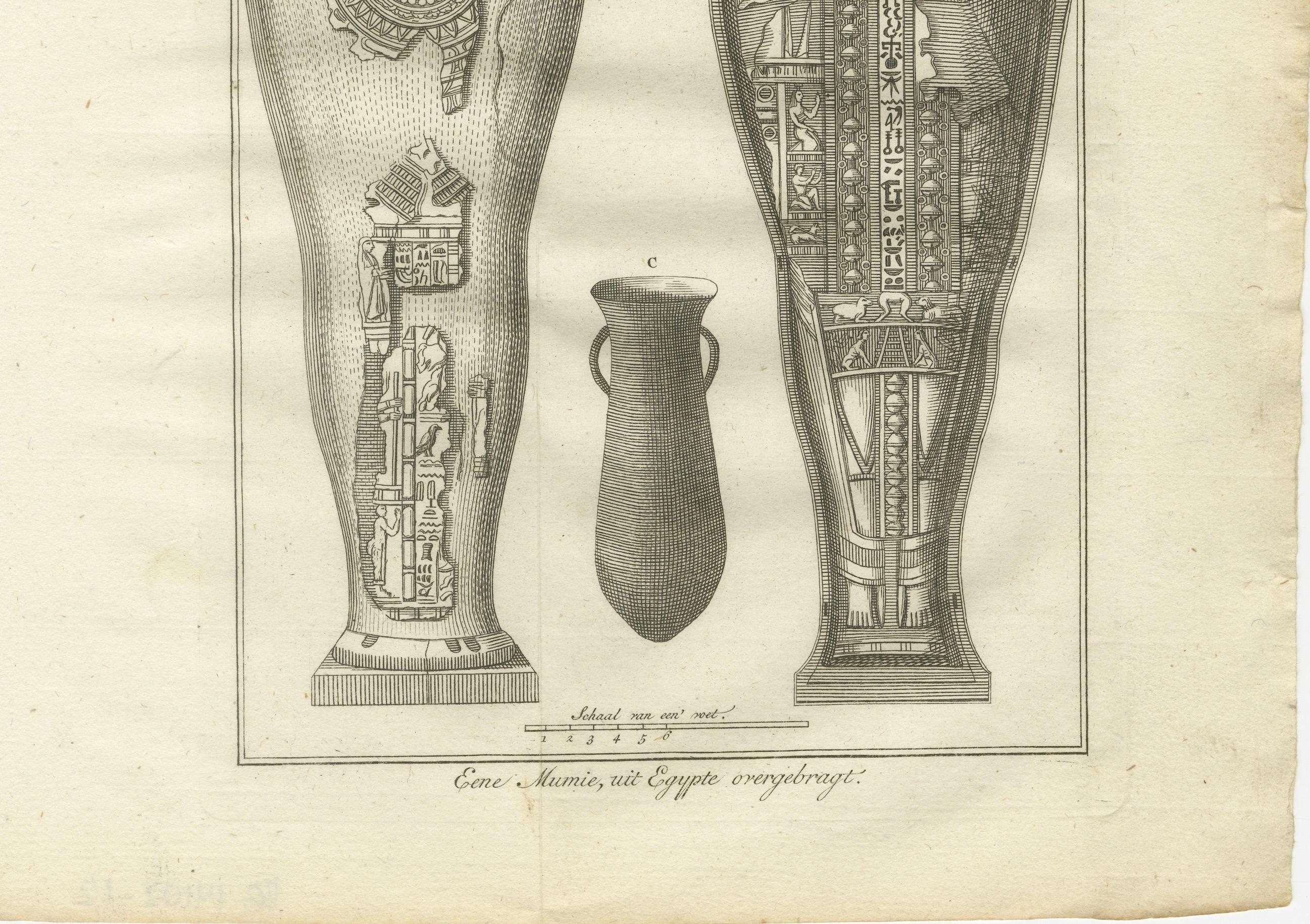
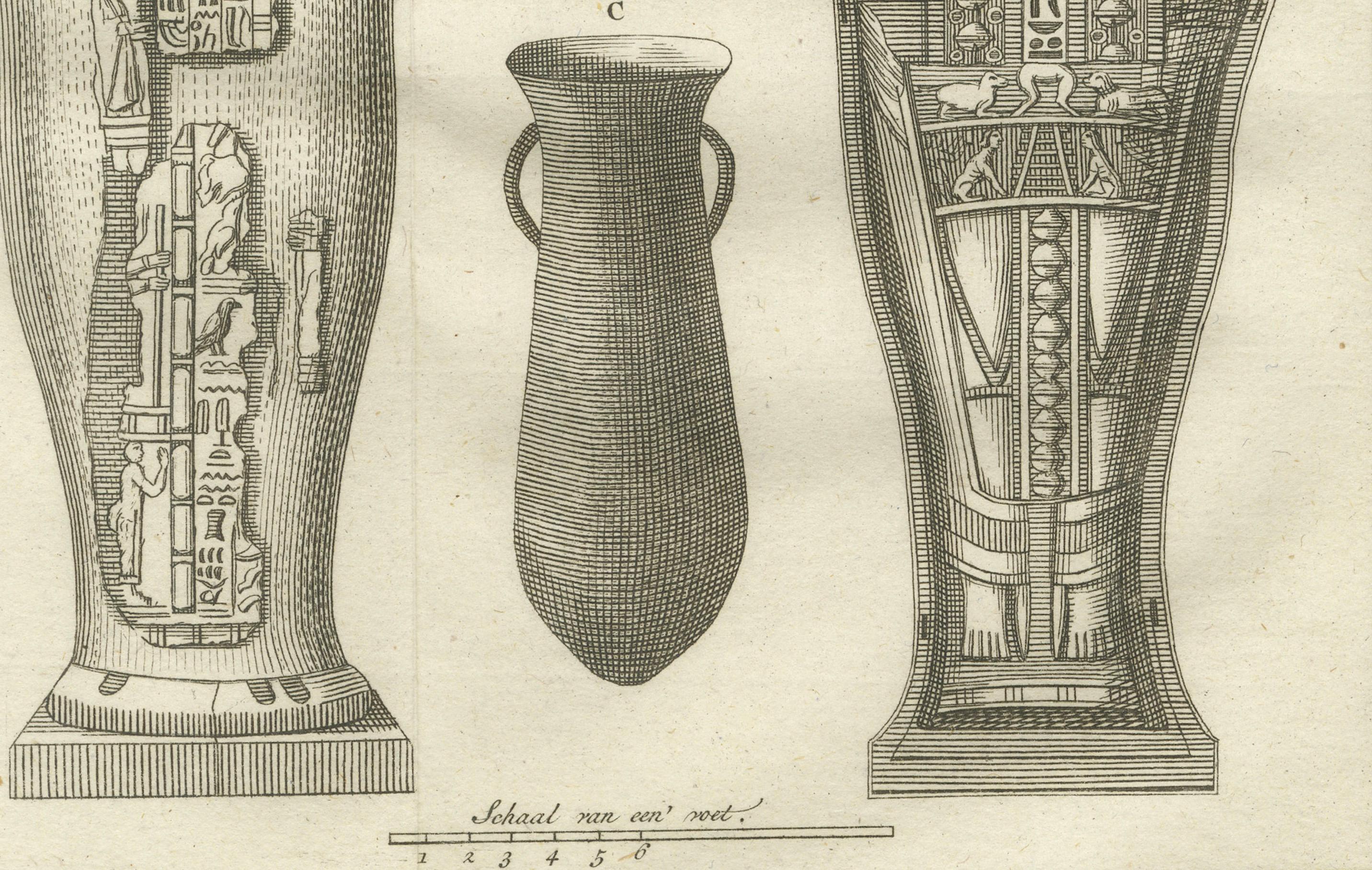
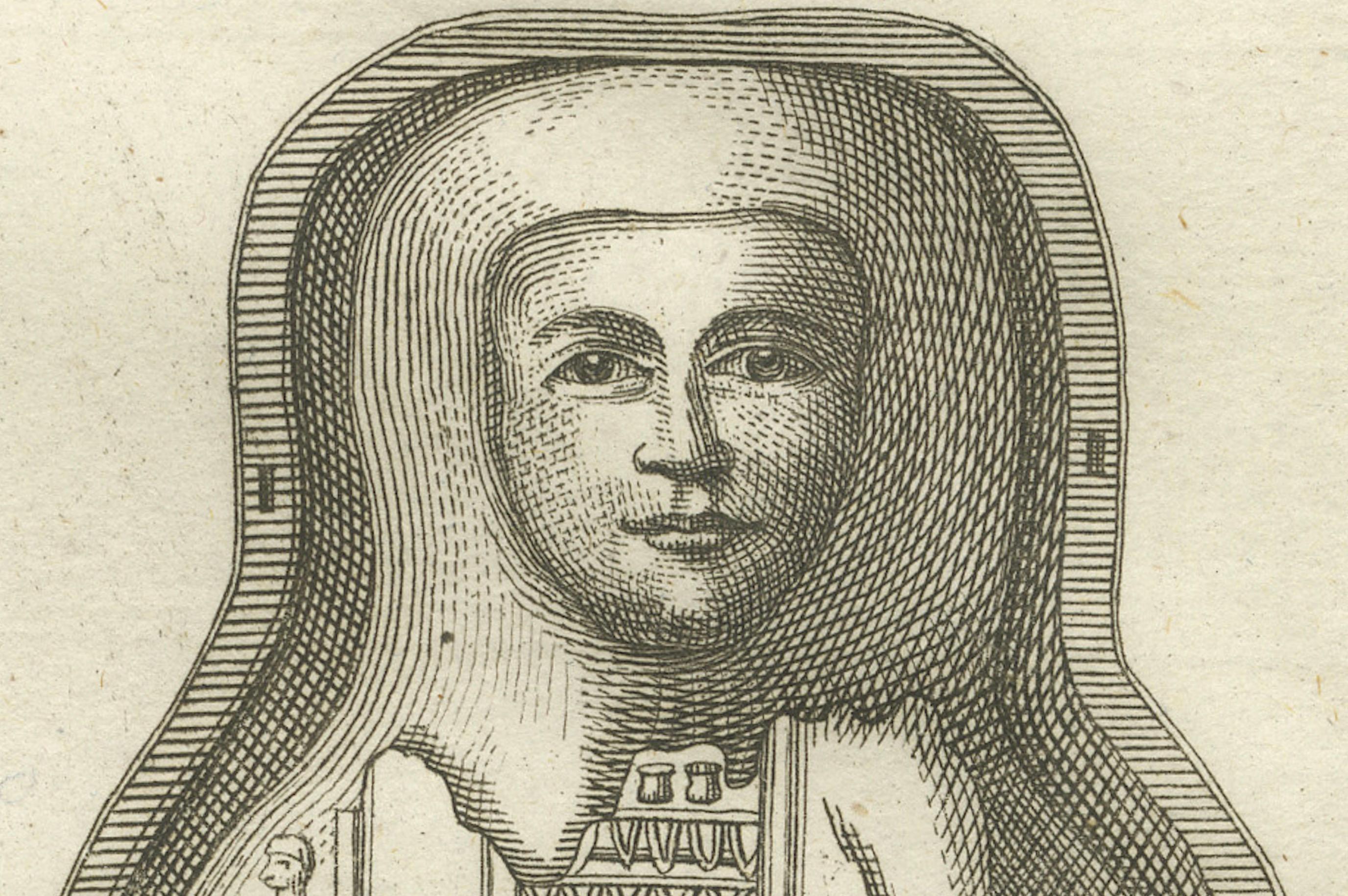
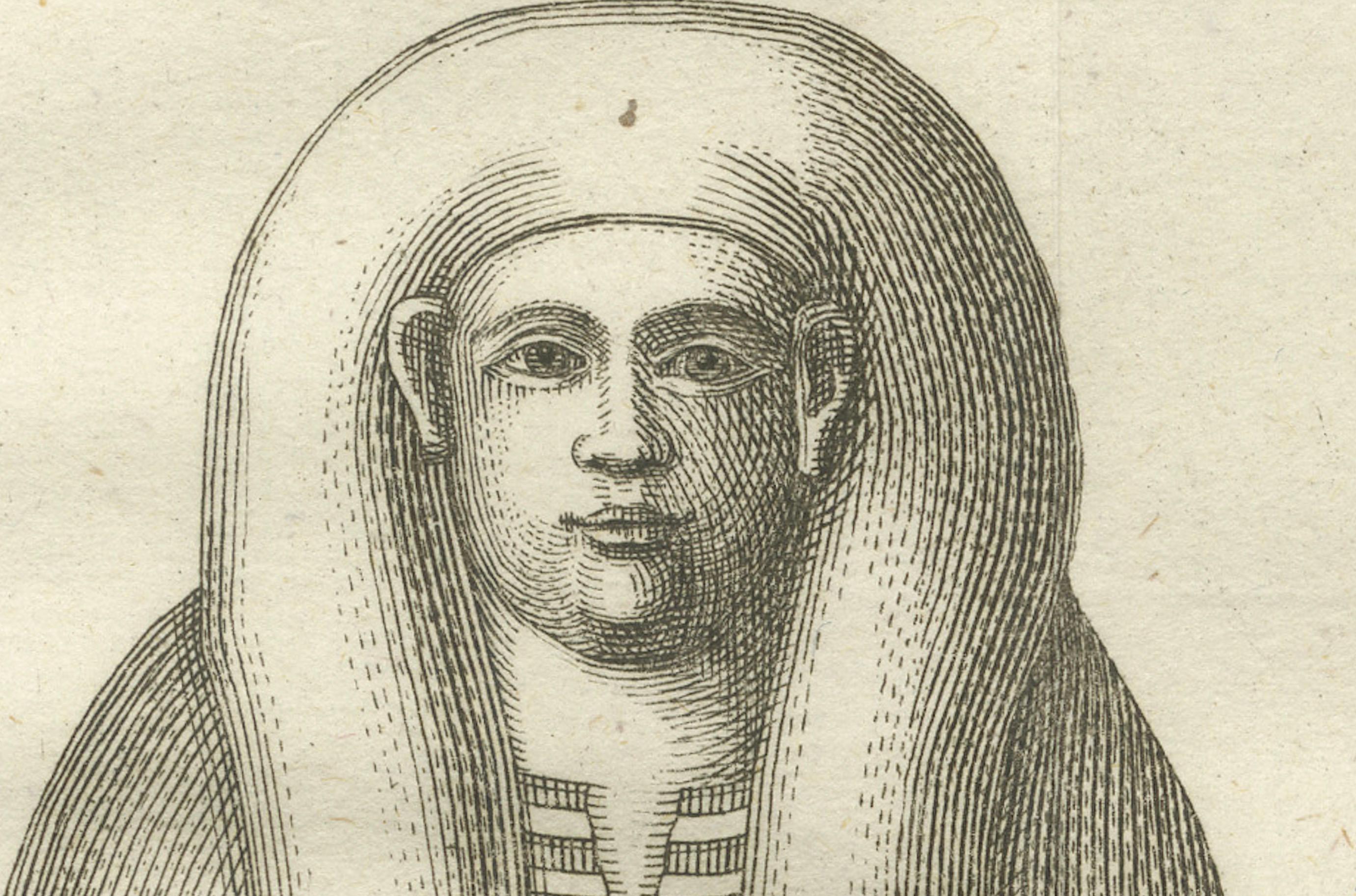
The engraving shows two views of a sarcophagus and its contents. On the left (B), the closed outer casing of the coffin is illustrated, featuring the carved portrait of the deceased with traditional headdress, a decorated collar, and stylized inscriptions along the legs. On the right (A), the lid has been removed to reveal the wrapped mummy inside, whose bandages are painted or inscribed with hieroglyphs and figures of protective deities. These inscriptions would typically include prayers, spells, and symbolic artwork to guide the deceased safely through the afterlife.
In the center, item C represents a canopic jar, one of the vessels used in ancient Egyptian burial practices to store and preserve the internal organs removed during the mummification process. The jar is drawn with simple handles and a narrow neck, possibly an idealized or generalized form rather than one of the deity-headed examples often associated with canopic sets.
The Dutch caption below reads, "Eene Mummie uit Egypte overgebragt," meaning "A mummy brought from Egypt." This illustration reflects 18th-century European interest in Egyptology, sparked by travel accounts and antiquarian collections. Richard Pococke was one of the earliest British travelers to systematically document the monuments, customs, and artifacts of Egypt.
This print belongs to *Beschryving van het Oosten en van eenige andere landen* (Description of the East and Some Other Lands), translated and annotated by Ernst Willem Cramerus and published in 1776 in Utrecht, Rotterdam, and Amsterdam.
Condition report:
Excellent condition. Light toning and some minor foxing near the right edge. Strong plate mark and crisp detail throughout. No tears or repairs. Verso blank. Folding lines as issued.
Framing tips:
Display in a dark wood or black frame with a wide cream or parchment-colored mat. The visual symmetry and clarity of linework make this print particularly well suited for display in a museum-style setting, study, or collection focused on ancient civilizations.
Technique: Engraving
Maker: Unknown engraver after Richard Pococke, Netherlands, 1776