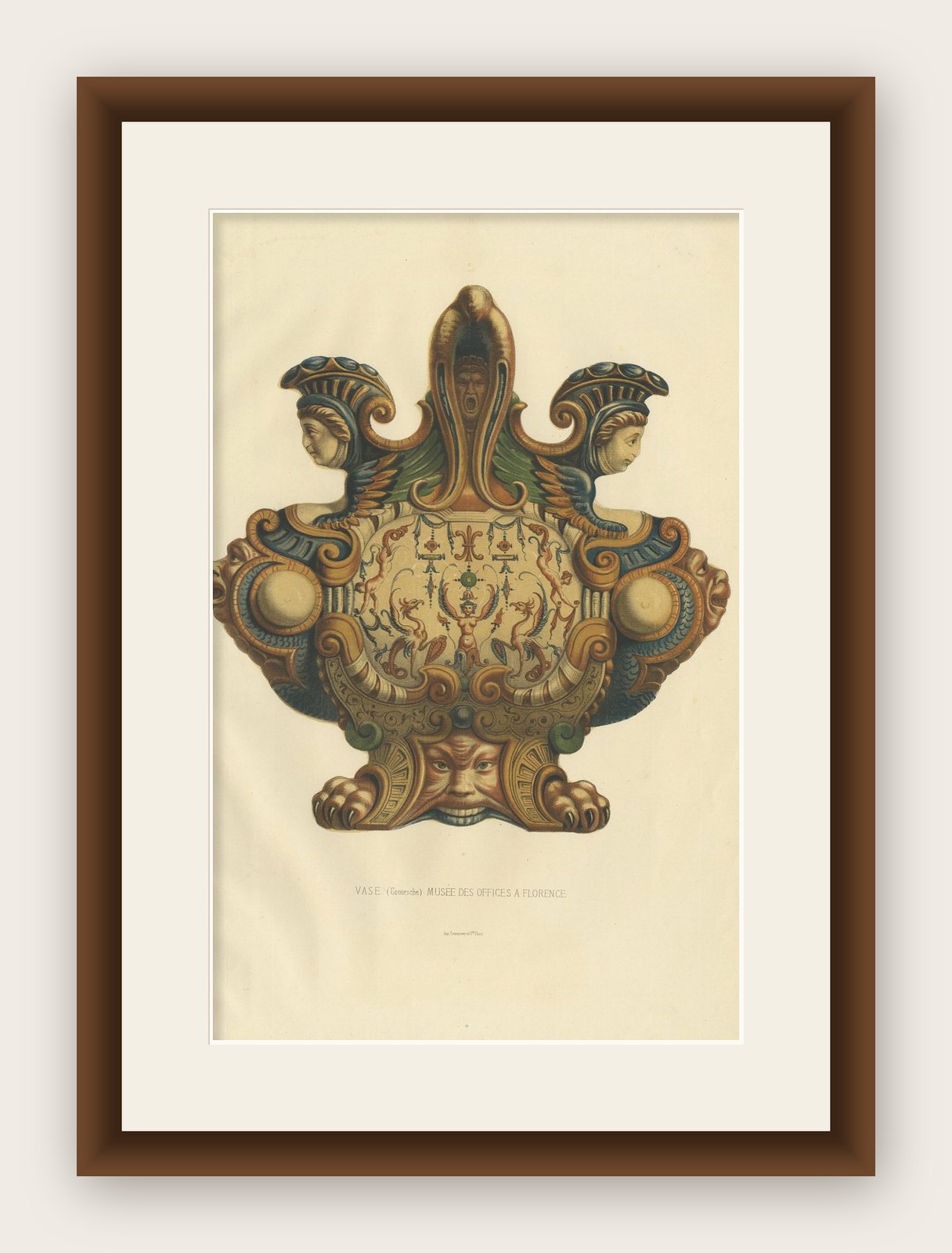
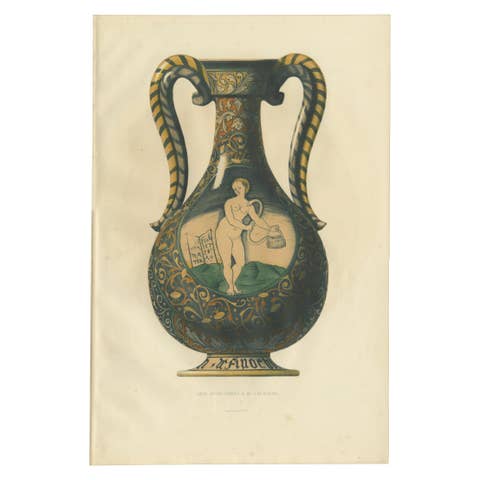
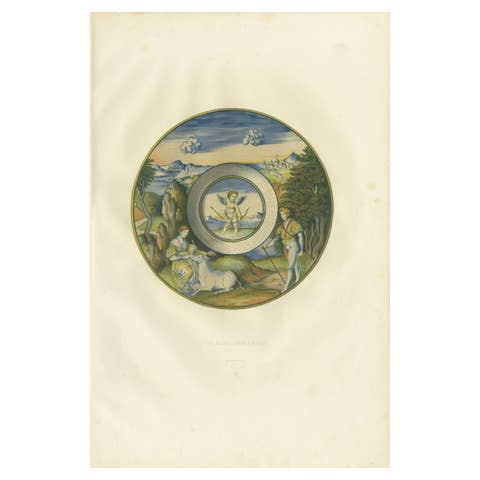
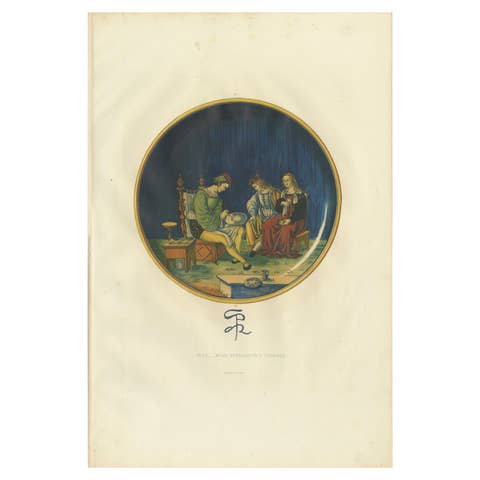
Antique Lithograph of Italian Faience Vase – Uffizi Florence, Delange, 1869
€ 450
Original antique · The actual sheet photographed · Certificate of authenticity on request · Sold unframed · Worldwide shipping from € 15 (rates)
Date
1869
Mapmaker / artist
Henri Delange, Paris, 1869
Technique
Color lithograph
Sheet size
53 × 35 cm (20.9 × 13.8 in)
Reference
BG-12770-95
What the condition grades mean
Excellent
Bright and clean, with no faults worth mentioning.
Very good
Only light signs of age, such as faint toning.
Good
Normal signs of age for a sheet of this period: toning, some foxing, small marks or neat old repairs.
Fair
Clear faults such as staining, tears or repairs, priced to match.
Every fault we see is written in the condition note, and the whole sheet is shown uncropped in the photos.
Condition
Very good, with general age toning and occasional light foxing in the margins. Plate mark visible. Strong original color lithography preserved. Please review the image carefully.
About this sheet
Antique Lithograph of Italian Faience Vase, Uffizi Florence, Delange, 1869
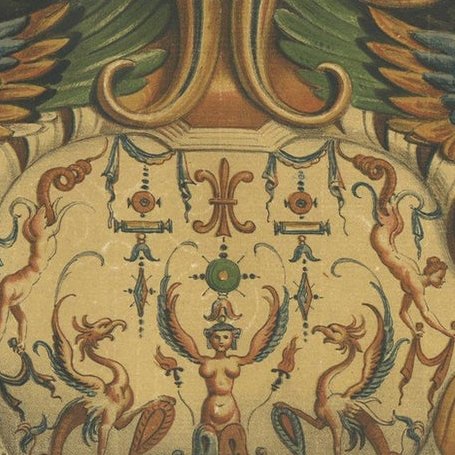
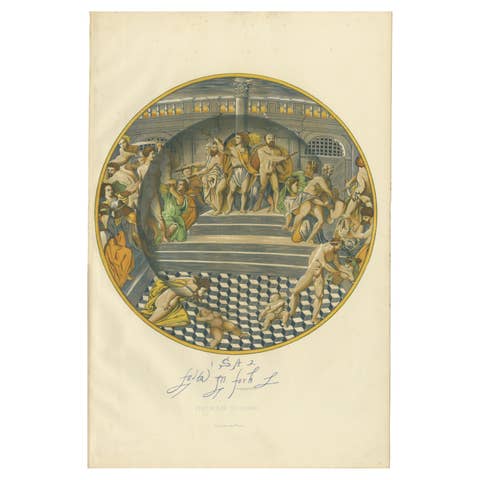
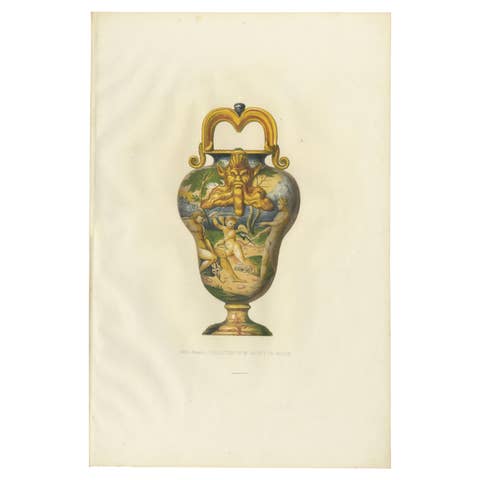
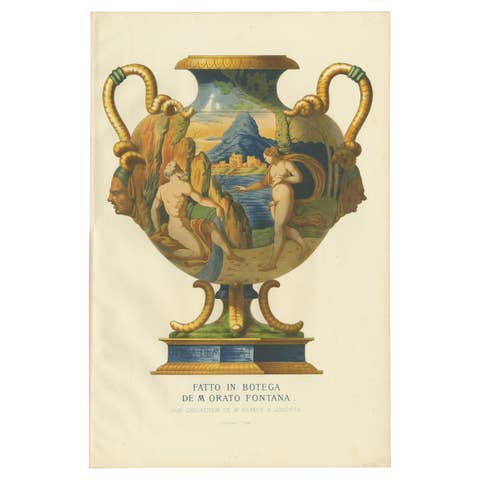
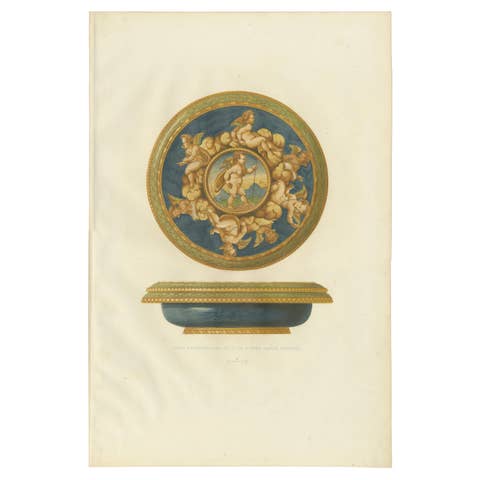
Impressive large-format lithograph depicting a fantastical Italian faience vase in grotesque style, preserved in the collection of the Uffizi Gallery in Florence. The vessel is richly ornamented with hybrid figures, masks, scrolls, and mythological motifs, blending sculptural fantasy with painted grotesque decoration. Two winged female busts form the handles, while dramatic masks and leonine paws adorn the base, lending the piece a theatrical Renaissance character. The central body of the vase features a detailed grotesque painting of symmetrical figures and arabesques, rendered with jewel-like color.
This plate originates from Henri Delange’s 'Recueil de Faïences Italiennes des XVe, XVIe et XVIIe Siècles' (Paris, 1869), one of the most luxurious and scholarly catalogs of Italian maiolica. The work documents masterpieces of Renaissance tin-glazed pottery preserved in major European collections. The grotesque style, inspired by ancient Roman wall paintings discovered in the Domus Aurea, became a signature mode of decoration in Italian ceramics of the 15th and 16th centuries, prized for its inventive, often whimsical reinterpretation of classical forms.
Framing tips: This spectacular design will benefit from a wide ivory or cream mount to balance its bold ornamentation. A dark wood frame will enhance its dramatic Renaissance character, while a gilt frame can highlight the golden tones. Double matting with a subtle green or terracotta inner line will echo the grotesque color palette and emphasize its intricate detail.