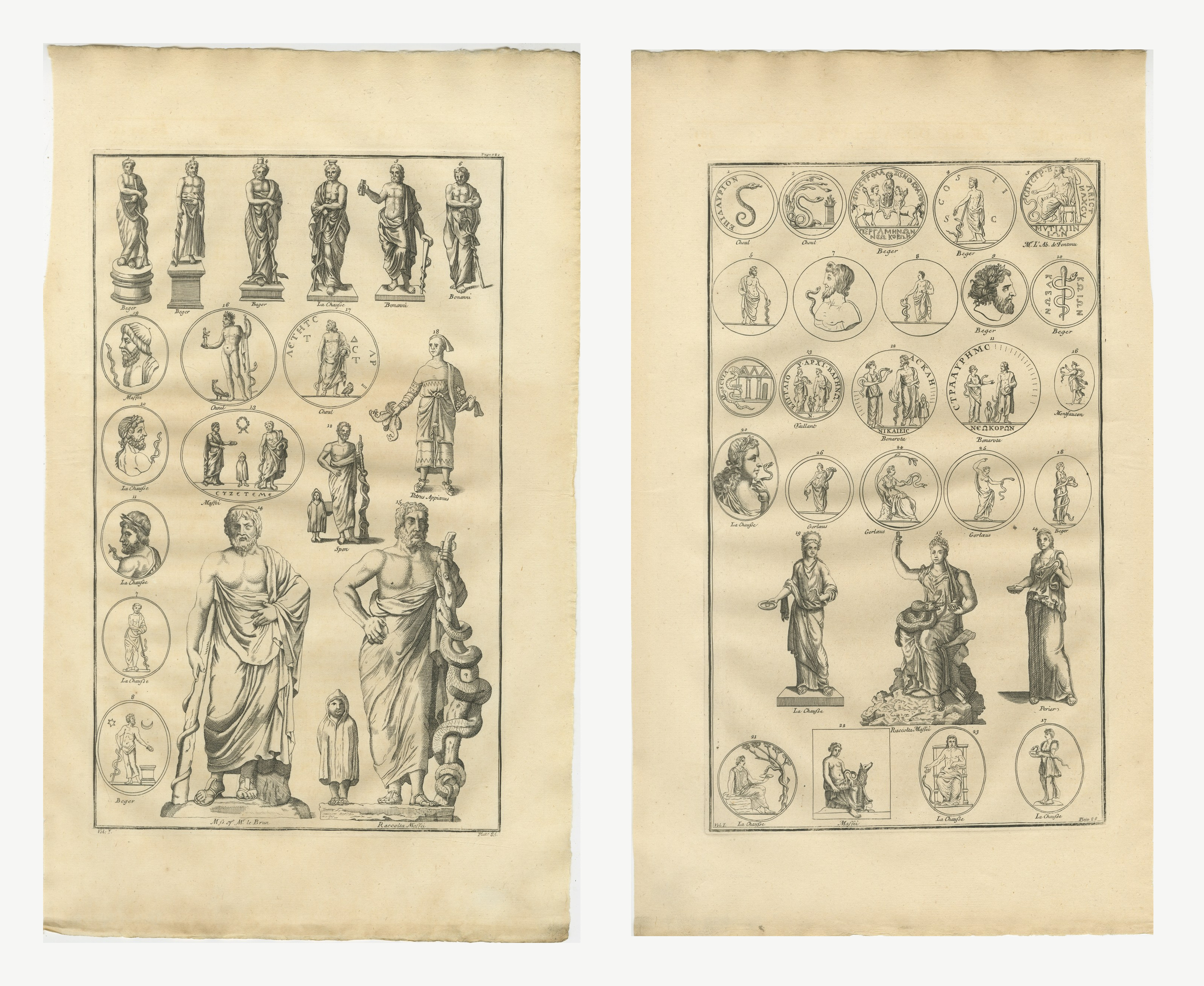
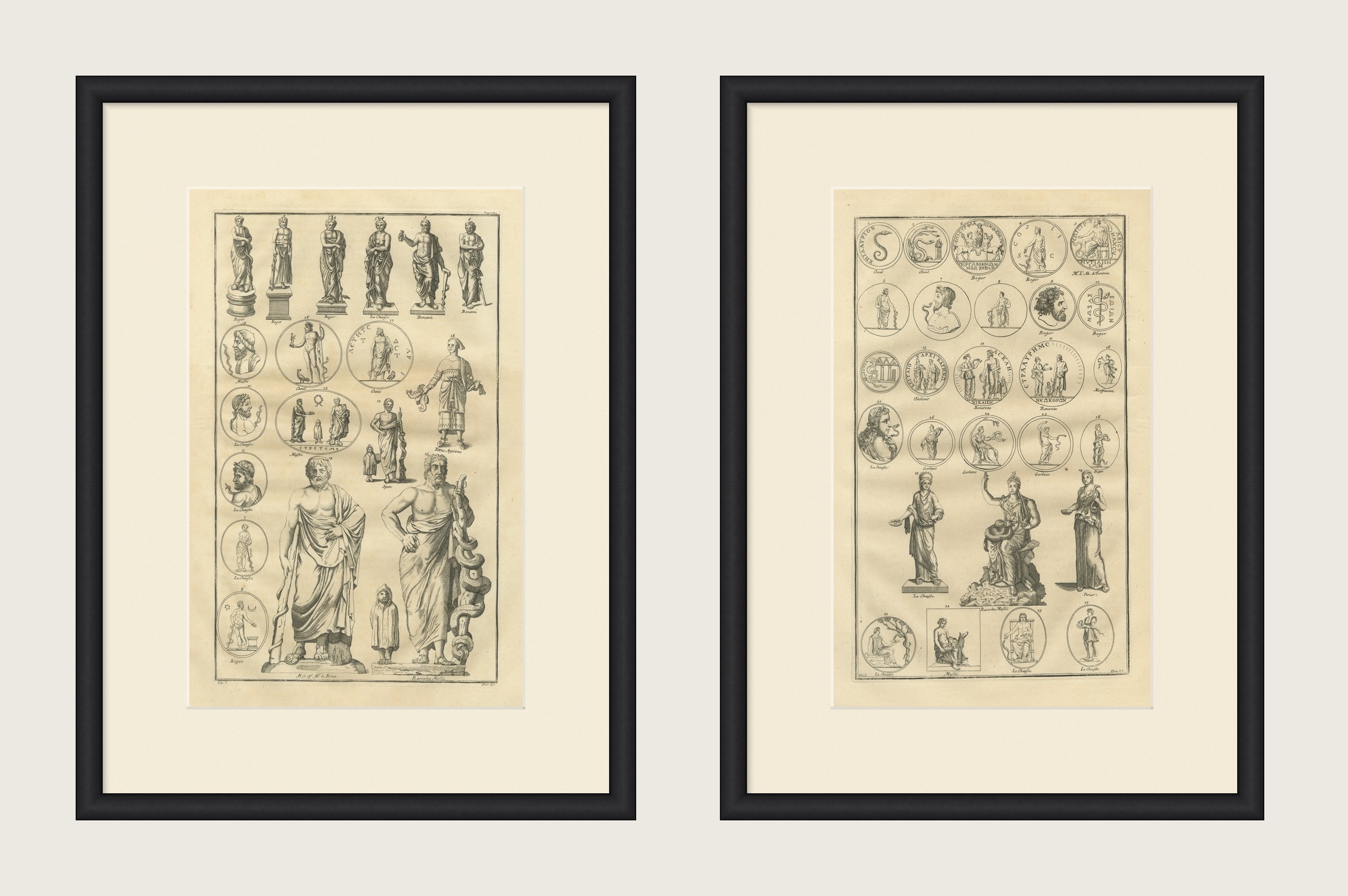
Aesculapius and Hygeia, Pair of Antique Engravings of Medicine, 1721
€ 475
Original antique · The actual sheet photographed · Certificate of authenticity on request · Sold unframed · Worldwide shipping from € 15 (rates)
Date
1721
Mapmaker / artist
Not named on the sheet
Publisher
J. Tonson and J. Watts, London
Technique
Copper Engraving
Coloring
Uncolored
Sheet size
42 × 25 cm (16.5 × 9.8 in)
Condition
Good
Reference
BG-14184-1-86
What the condition grades mean
Excellent
Bright and clean, with no faults worth mentioning.
Very good
Only light signs of age, such as faint toning.
Good
Normal signs of age for a sheet of this period: toning, some foxing, small marks or neat old repairs.
Fair
Clear faults such as staining, tears or repairs, priced to match.
Every fault we see is written in the condition note, and the whole sheet is shown uncropped in the photos.
Condition
Two sheets, both age toned. Foxing through the margins of both. The paper darker along the edges of both. Handling wear to the corners of both.
About this sheet
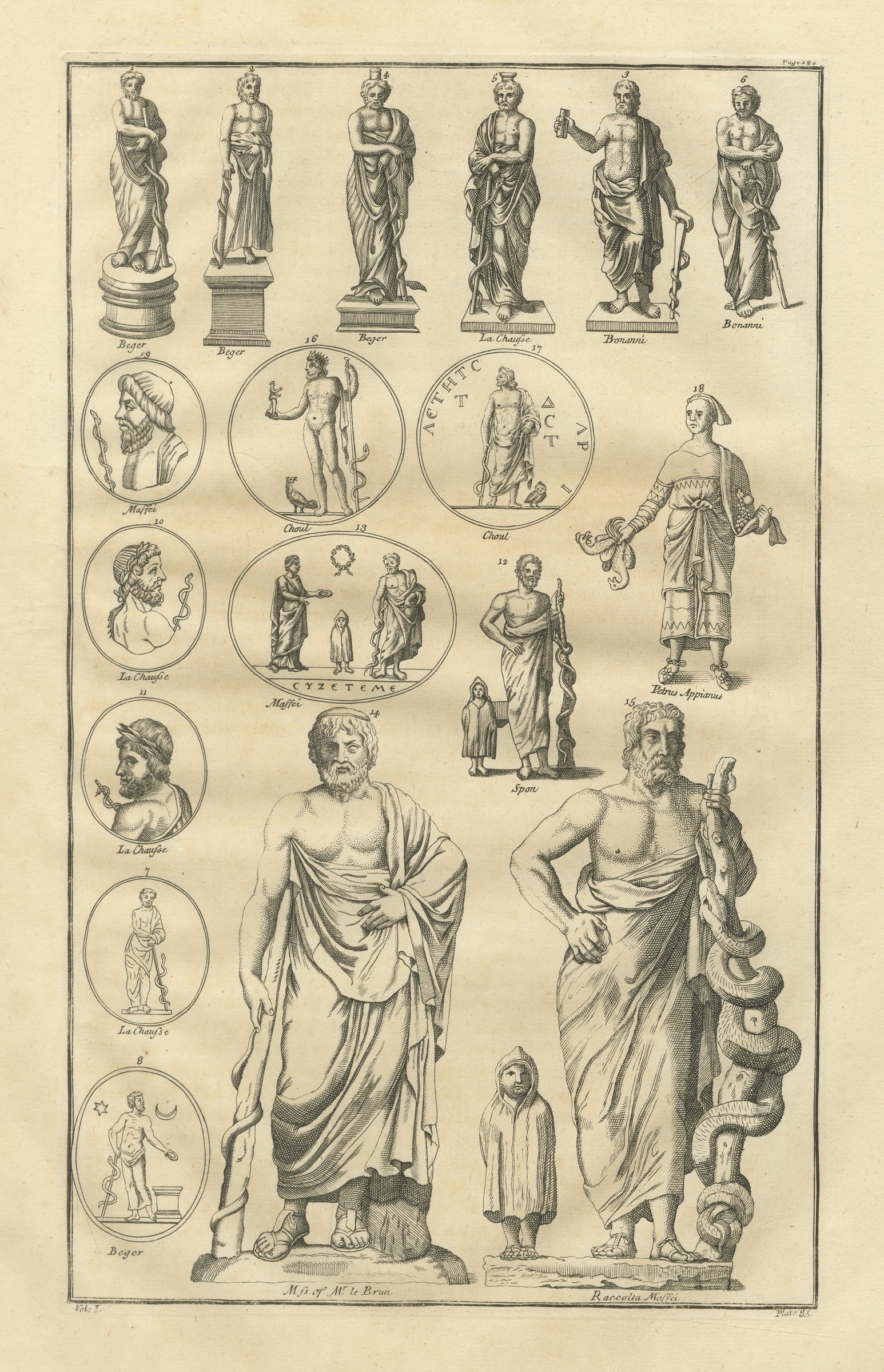
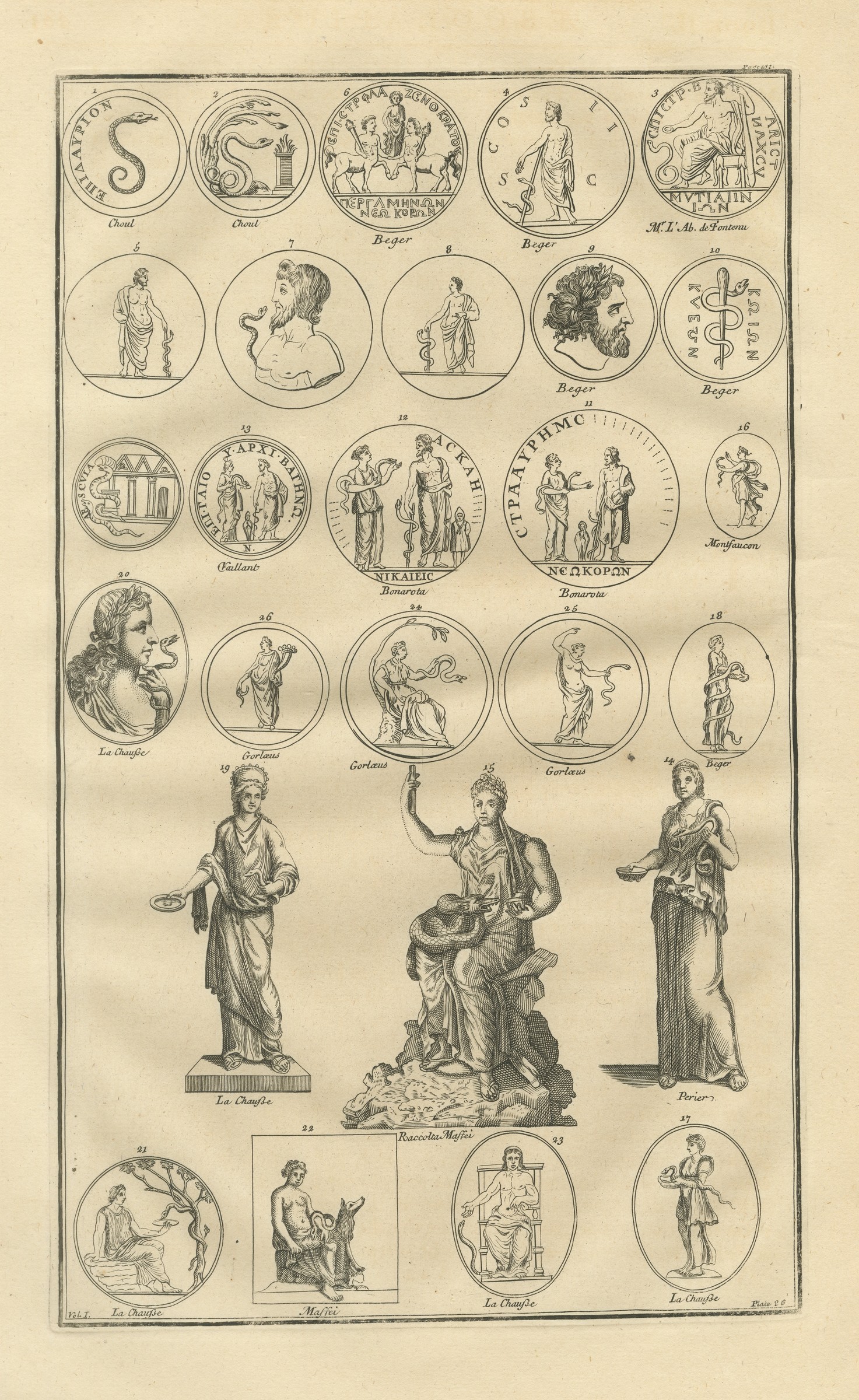
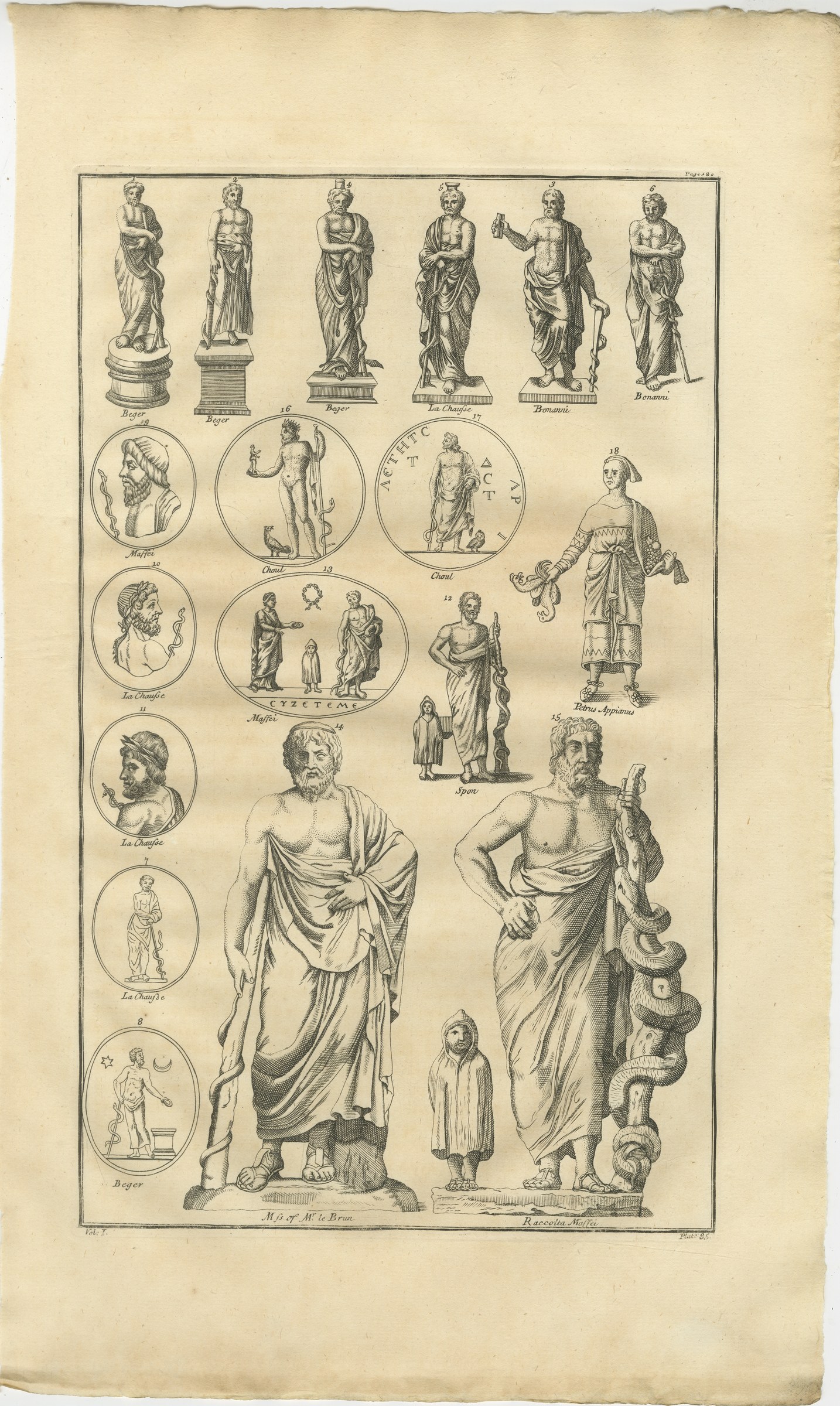
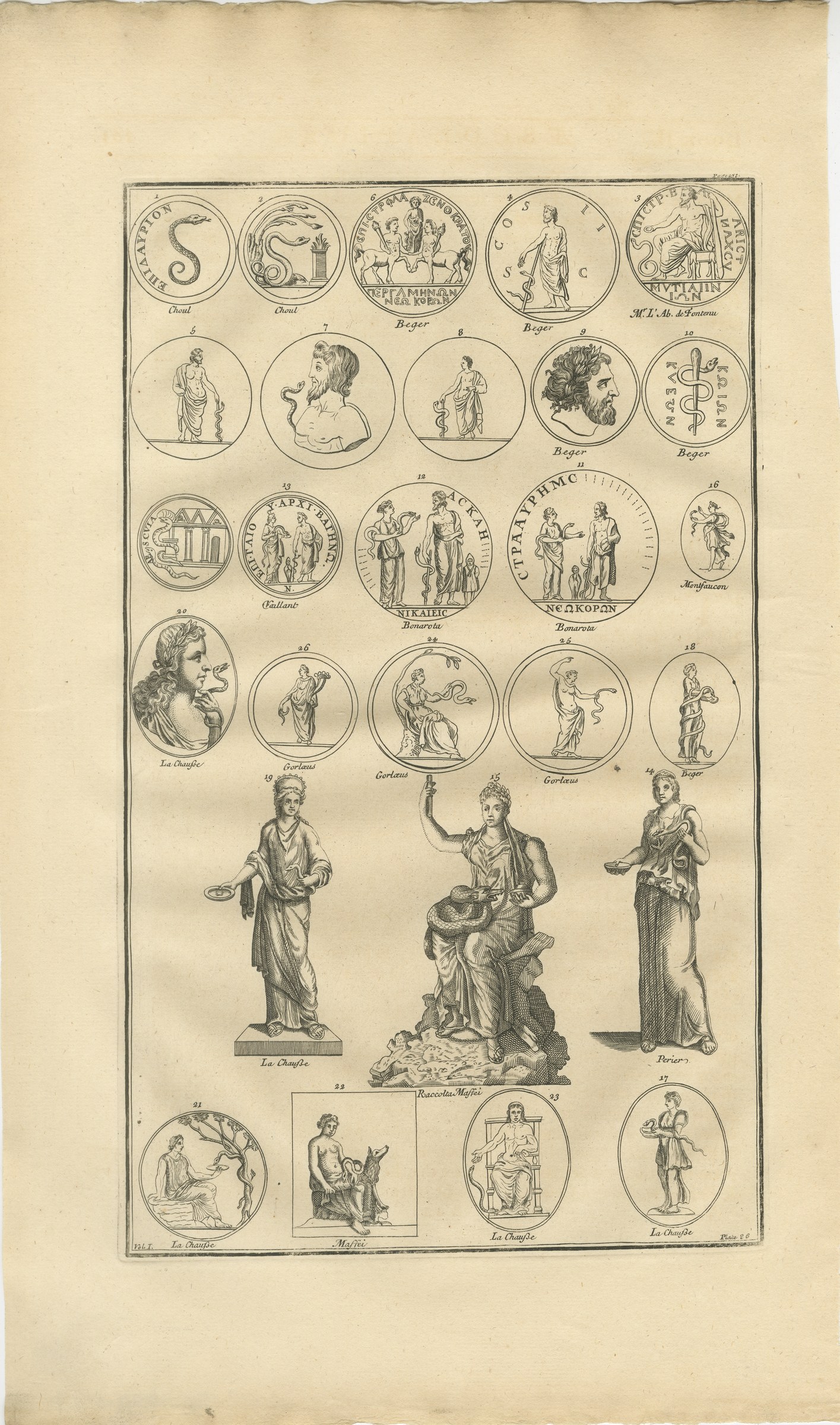
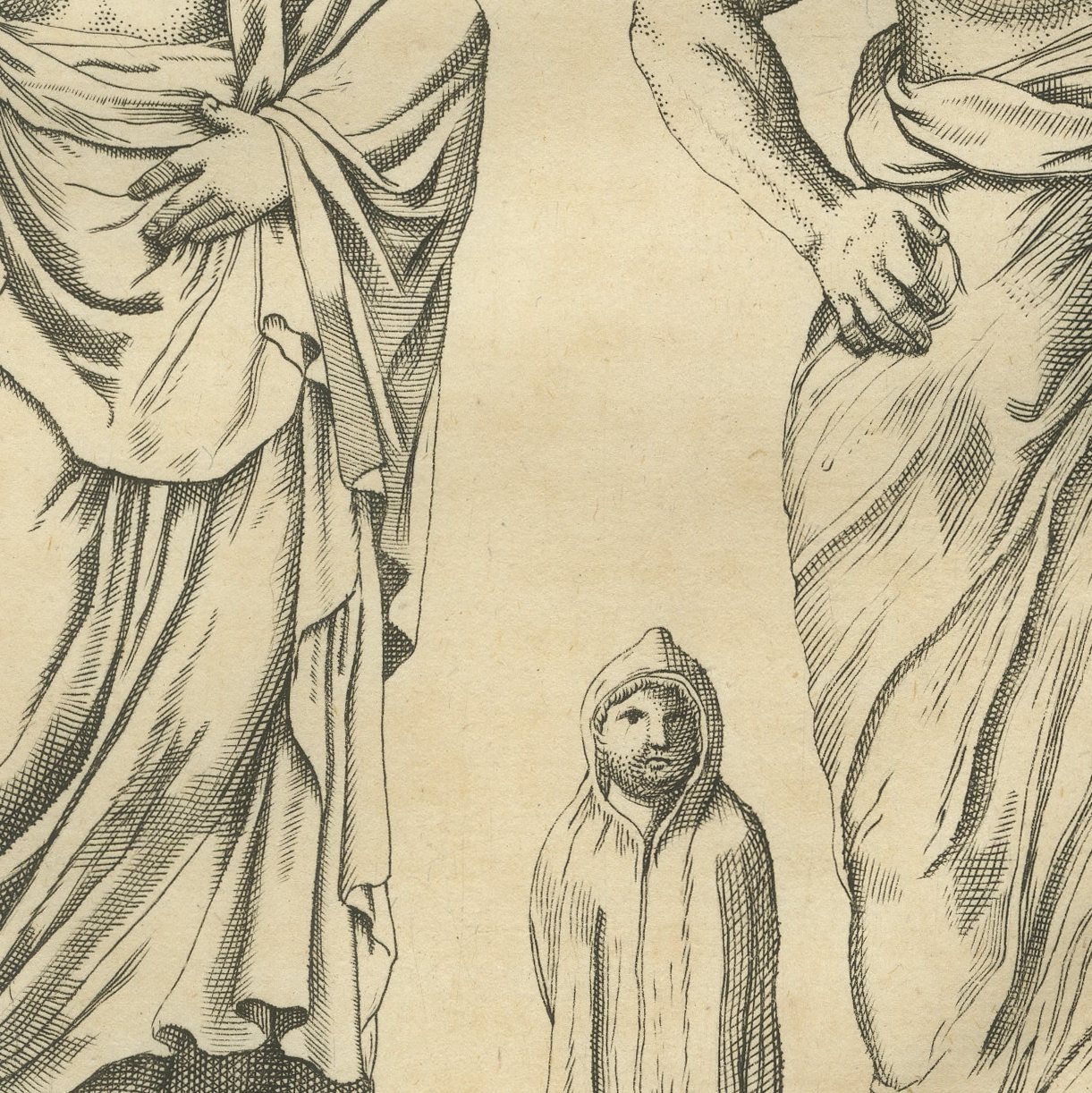
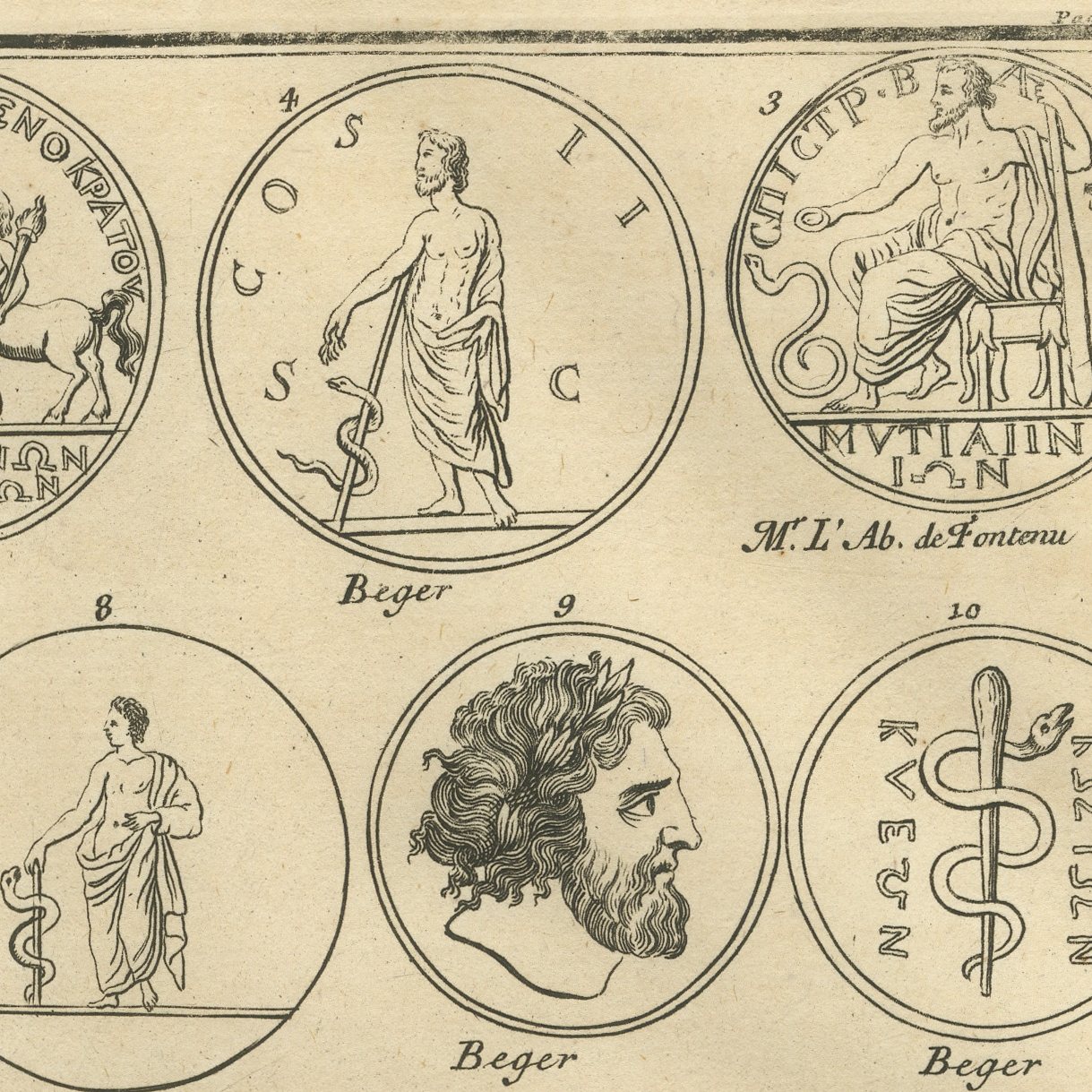
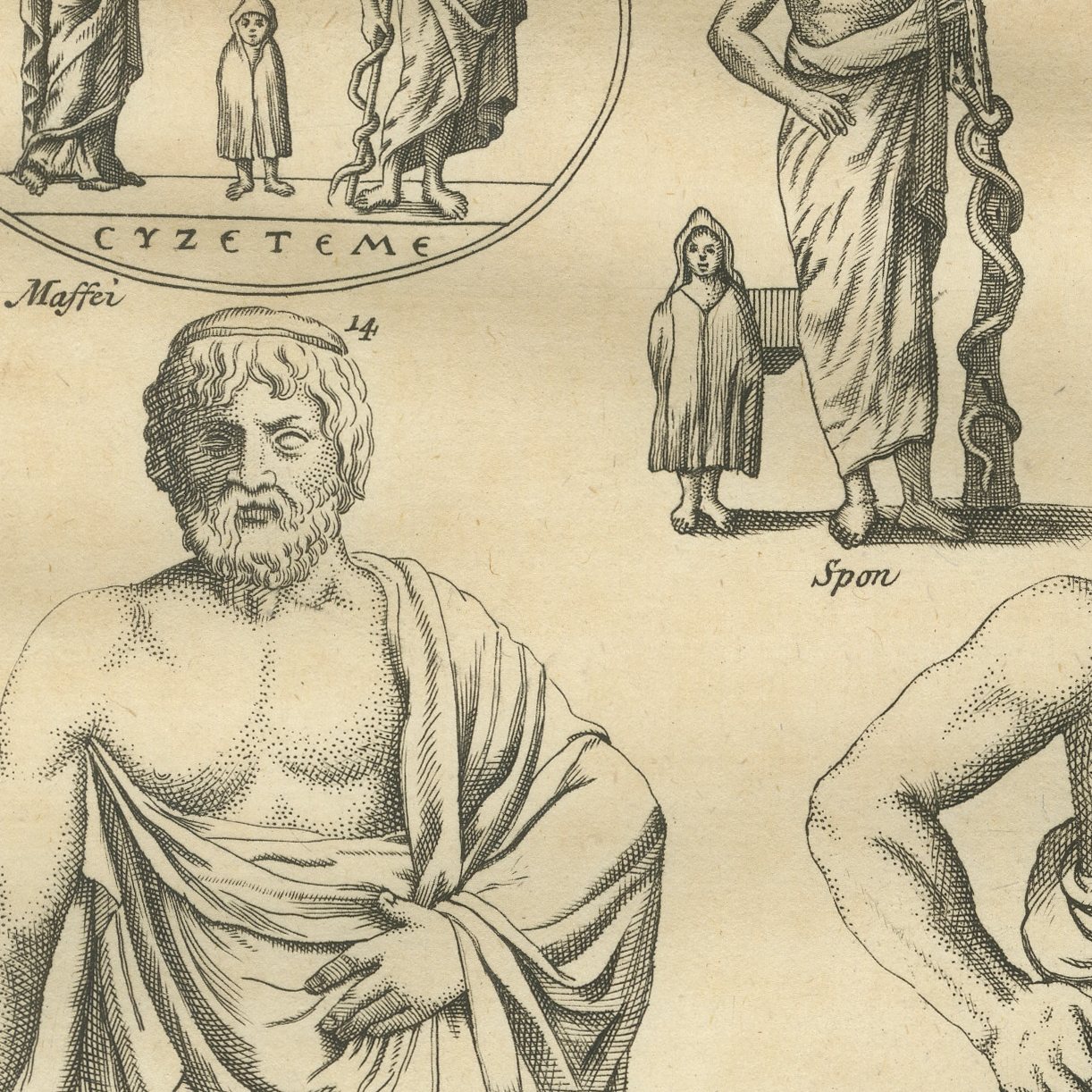
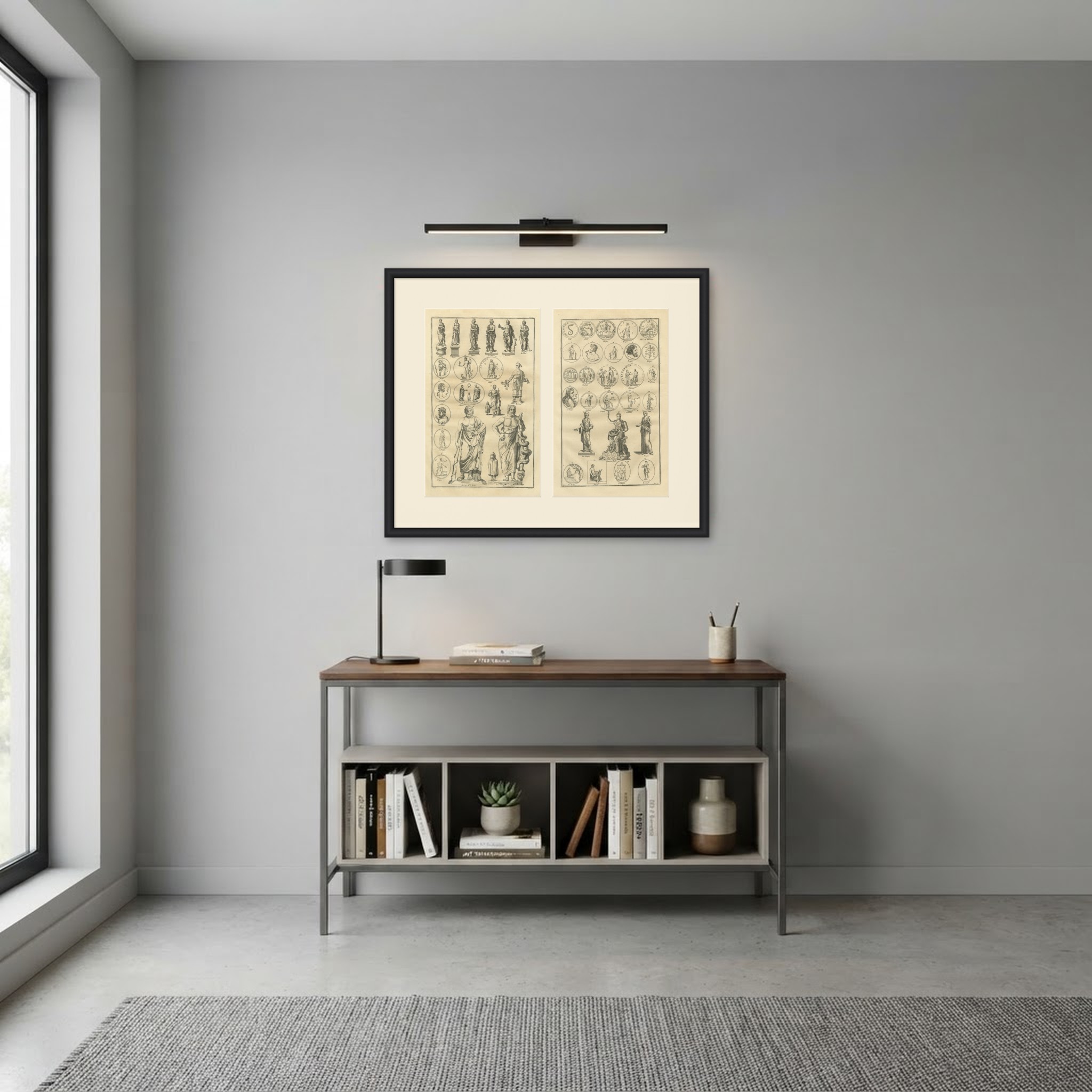
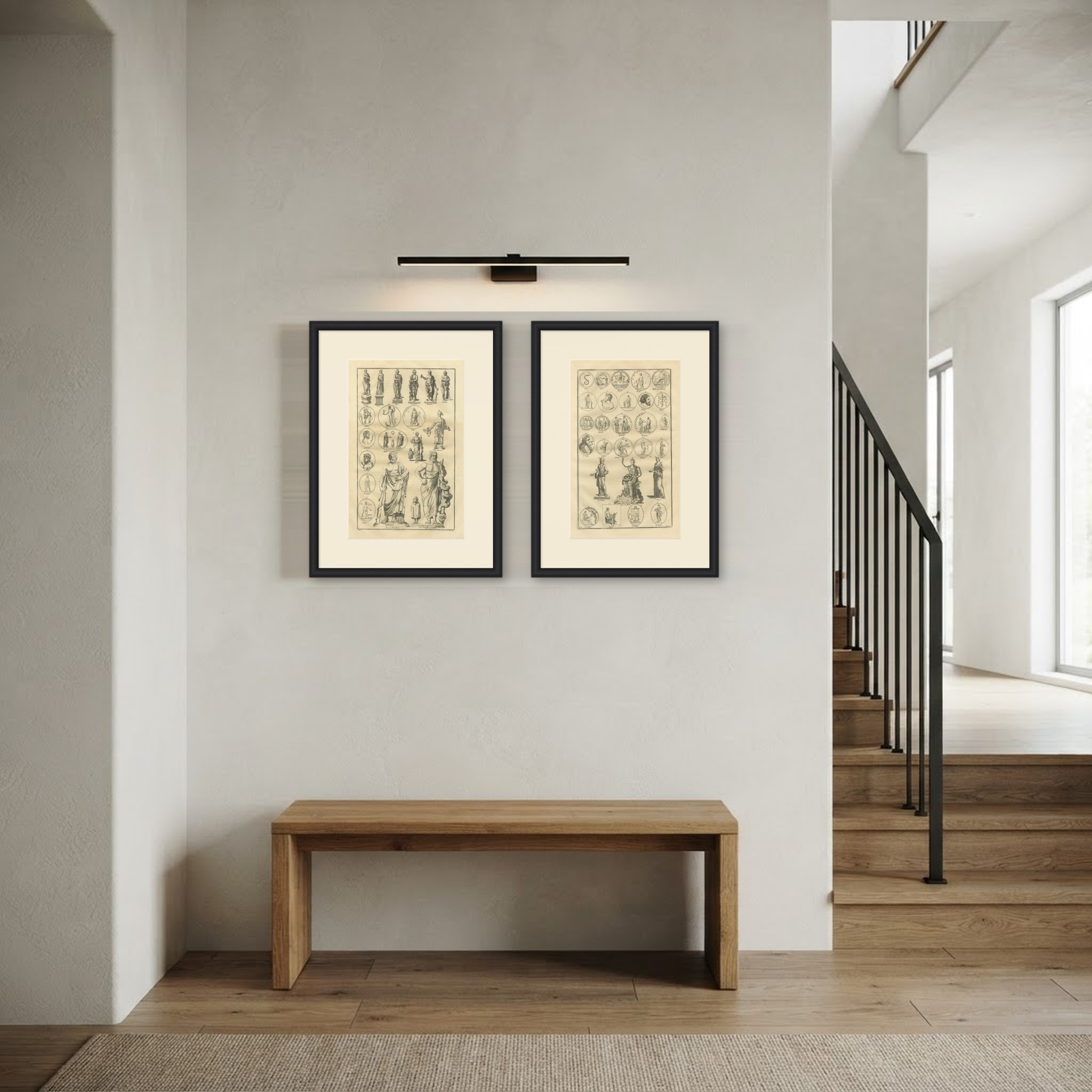
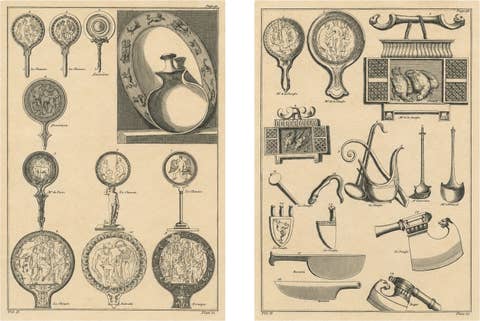
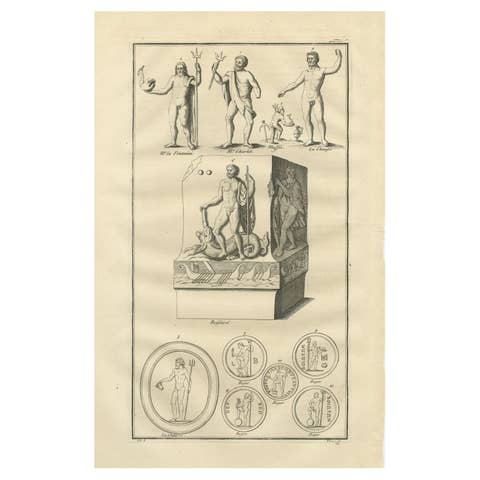
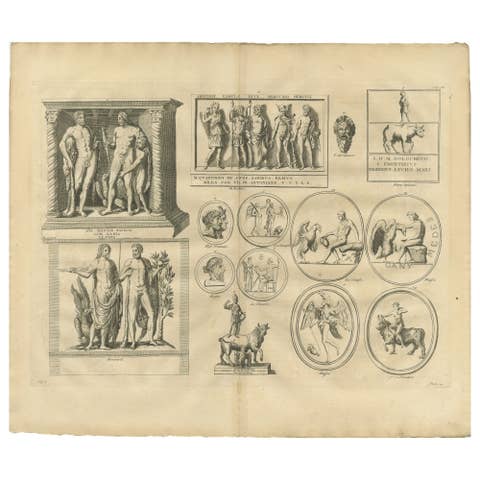
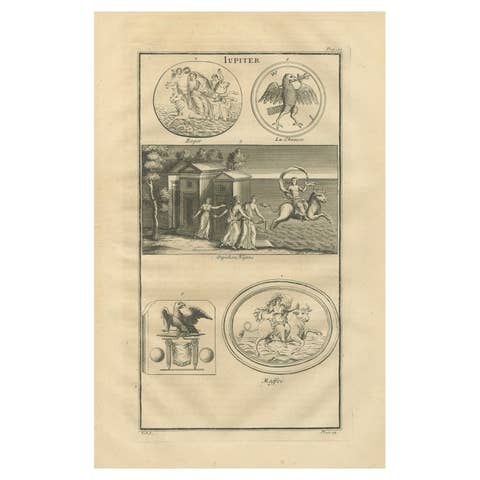
This is a pair of original antique engravings of 1721, sold together, on which Bernard de Montfaucon gathered the gods of healing. The first sheet belongs to Aesculapius. He stands at full length, bearded and wrapped in a heavy himation that leaves the chest bare, one hand resting on the tall staff around which a serpent is coiled, in several marble types credited to the Raccolta Maffei and to Beger; and beside him, repeated down the plate, is the small figure of Telesphorus, a child or dwarf muffled from head to foot in a hooded cloak, who attended the god as the spirit of convalescence. The second sheet belongs to his daughter Hygeia, a draped woman holding a shallow bowl from which a serpent coils up her arm to drink, shown standing and seated in several types, with serpents drawn on their own at the head of the plate. Along its lower registers run Greek bronze coins of the cities of Asia Minor, their legends engraved around the rim, among them ΠEPΓAMHNΩN NEΩKOPΩN for the temple wardens of Pergamum and NIKAIEIΣ for Nicaea.
The plates come from Volume the First of Antiquity Explained, and Represented in Sculptures, the English translation of L'Antiquité expliquée et représentée en figures, published in Paris in 1719 by Bernard de Montfaucon (1655 to 1741), a French Benedictine monk of the Congregation of Saint Maur. The translation is by David Humphreys, fellow of Trinity College, Cambridge, and was printed in London by J. Tonson and J. Watts in five folio volumes, the first two dated 1721 and the other three 1722. The first volume deals with the gods of the Greeks and Romans and with the heroes raised to divinity. Montfaucon arranged the surviving images of ancient monuments by subject, so that each plate gathers figures copied from statues, reliefs, altars, gems, coins and other objects, numbered to his commentary. These plates carry no engraver's name and no printed title.
The set is made up of Plates 85 and 86 of Volume the First, each sheet lettered with its volume, plate and page number.
Two sheets, both age toned. Foxing through the margins of both. The paper darker along the edges of both. Handling wear to the corners of both.
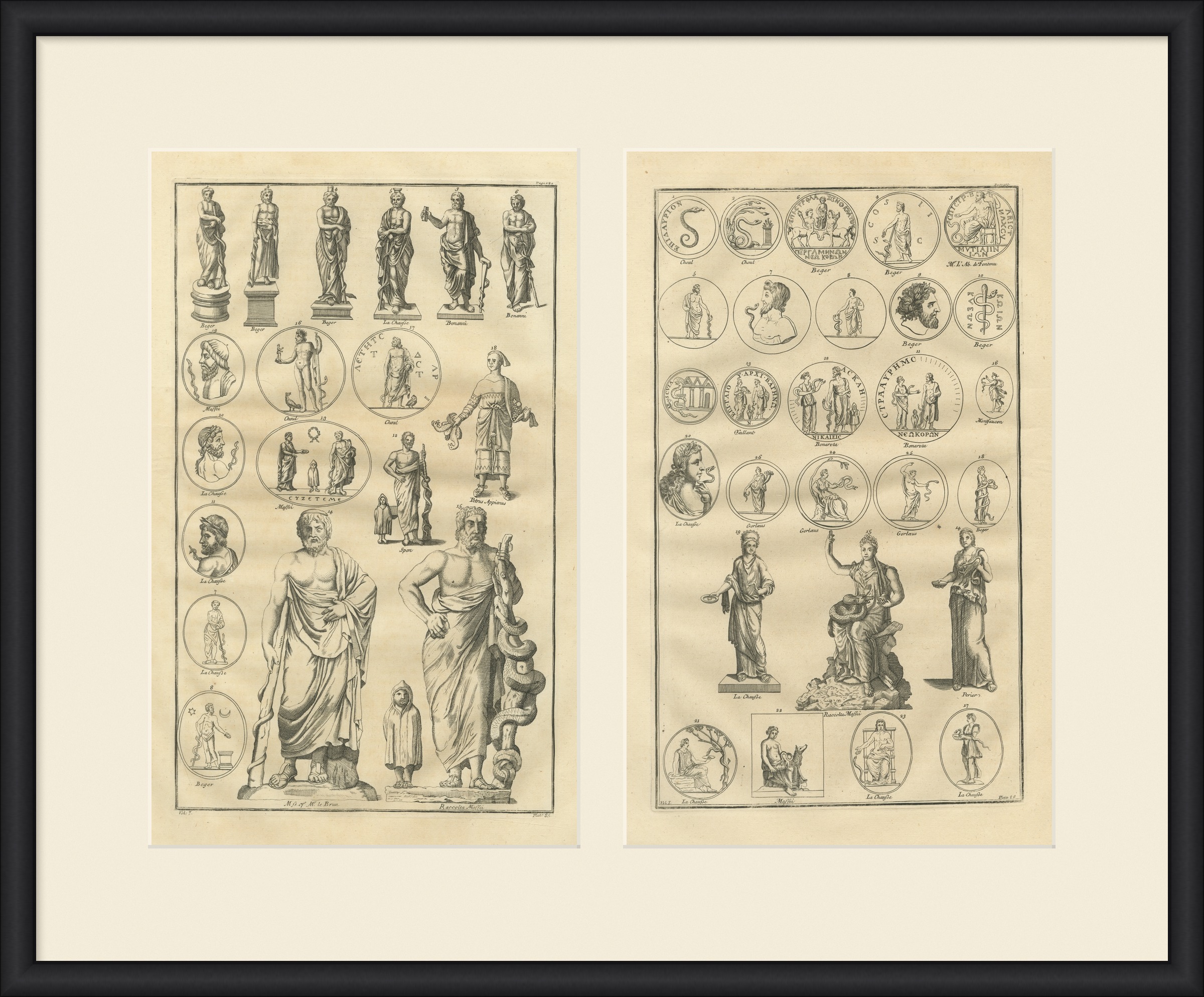
The set is two original sheets sold together, never split. These are original antique prints, not modern reproductions. This item is sold unframed. Any framed or interior images are shown for presentation and inspiration only, unless the listing explicitly states that the item is sold framed.